15 High Protein Breakfast Smoothies That Actually Keep You Full Until Lunch
Most breakfast smoothies taste great for about forty-five minutes and then leave you reaching for a snack before your first meeting even starts. The missing ingredient is almost always the same—enough protein to slow digestion, steady your energy, and keep hunger quiet for hours.
These fifteen smoothie recipes were selected because each one delivers a genuine protein punch from real ingredients, blends in under five minutes, and actually holds you over until lunch. No chalky powders required unless you want them. No complicated techniques. Just smart combinations that work on real weekday mornings.
Why Most Breakfast Smoothies Leave You Hungry by 10 AM
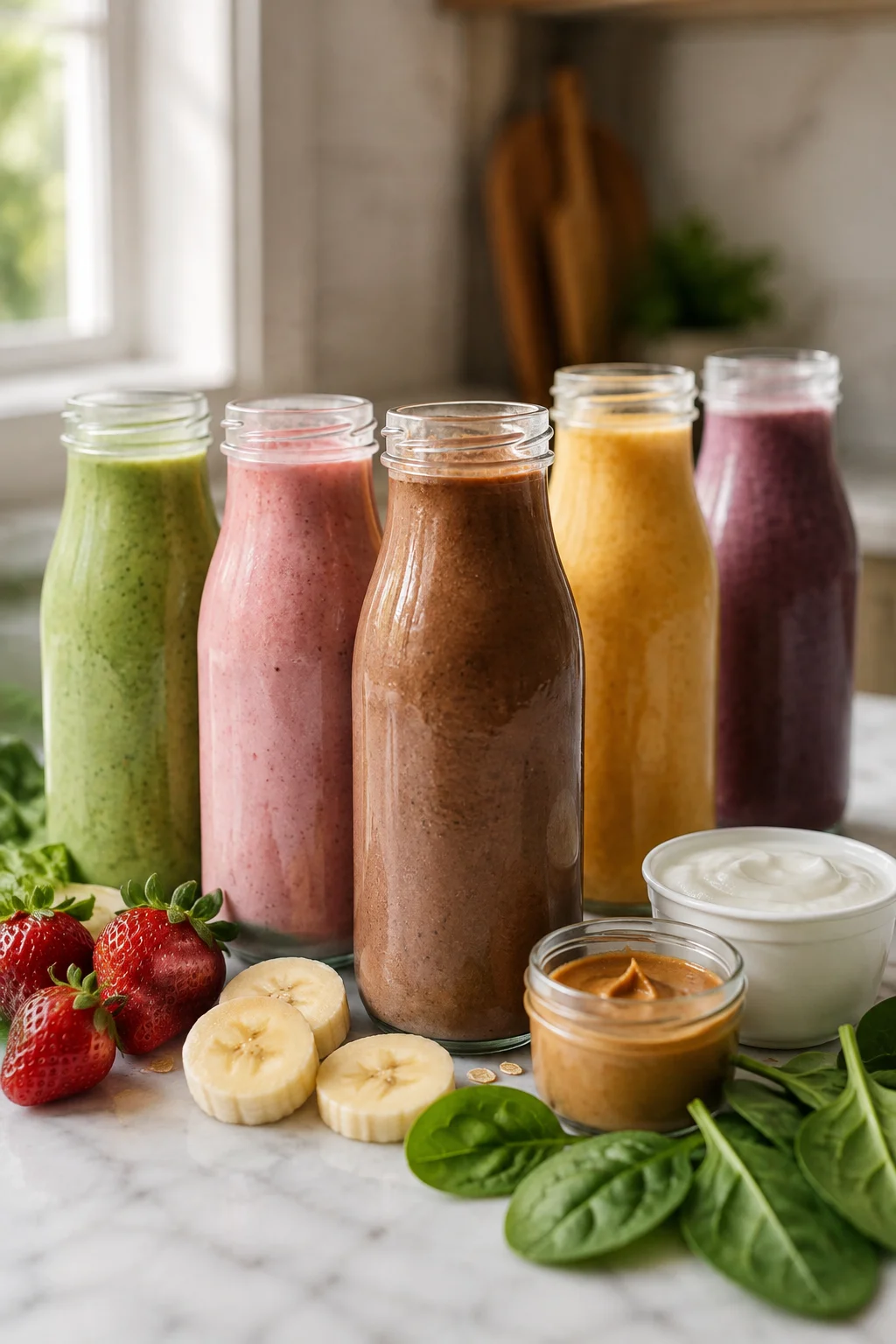
Here’s the pattern most people recognize. You blend a banana, some frozen berries, a splash of almond milk, and maybe a drizzle of honey. It tastes wonderful. You pour it into a to-go cup and head out the door feeling virtuous.
Then somewhere between your second email and your first phone call, your stomach starts growling again.
The reason is straightforward. Fruit-heavy smoothies are mostly carbohydrates and natural sugars. They digest quickly, spike your blood sugar gently, and then leave your system within an hour or two. Without adequate protein—and some healthy fat to slow absorption—your body simply processes the smoothie too fast to feel genuinely satisfied.
The fix isn’t complicated. You don’t need to turn your breakfast into a science experiment. You just need to build each smoothie around a meaningful protein source and support it with ingredients that add staying power.
What Actually Makes a Smoothie High in Protein?
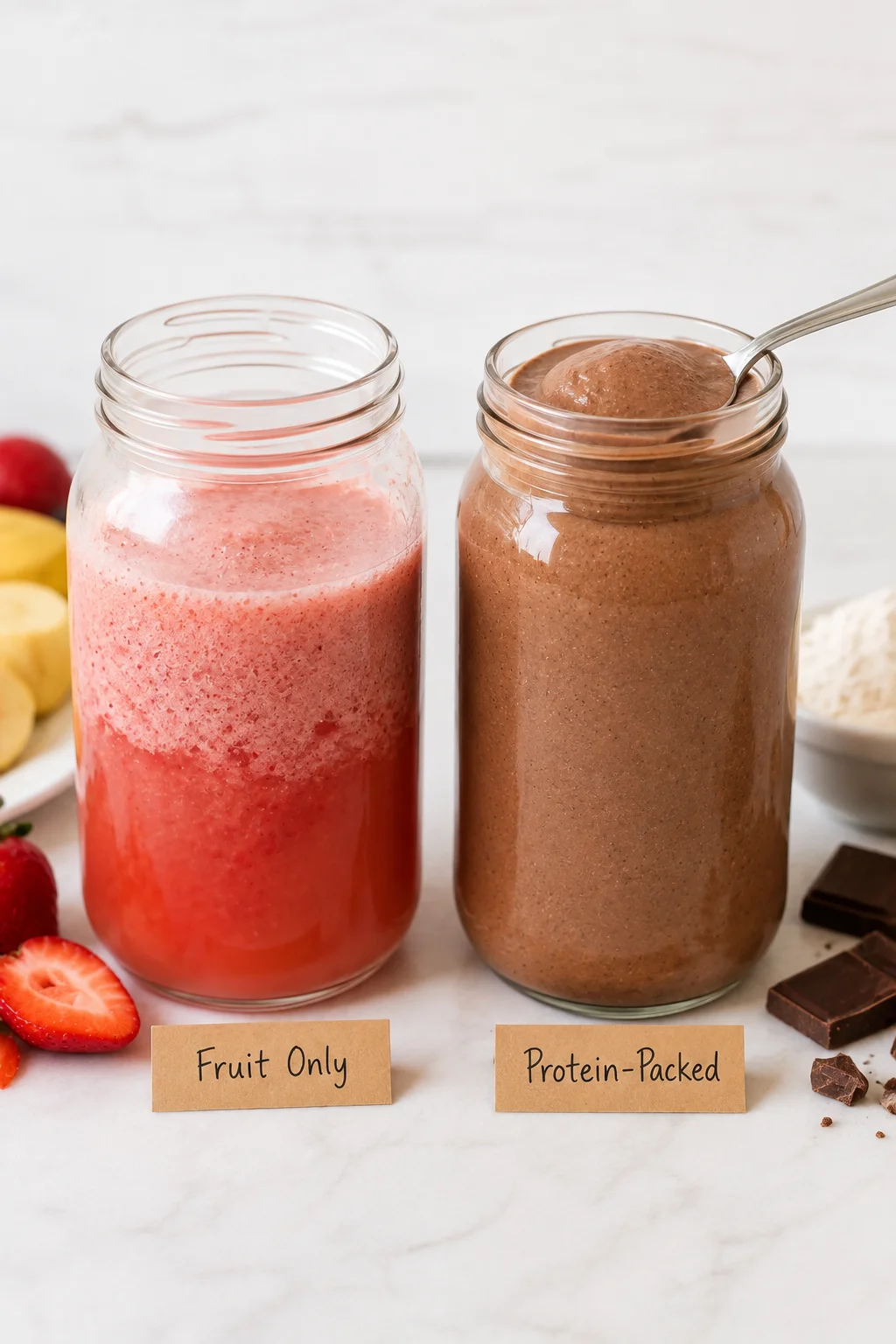
Before diving into the recipes, it helps to understand what you’re building toward. A genuinely filling breakfast smoothie isn’t just about dumping in a scoop of powder. It’s about layering protein sources with complementary ingredients that slow digestion and add physical volume to your stomach.
The Three-Layer Formula
Every smoothie in this guide follows a simple structure:
- Primary Protein Source – Greek yogurt, cottage cheese, protein powder, silken tofu, or nut butter. This is your foundation, providing 15–25 grams of protein per serving.
- Sustaining Carbohydrate – Oats, banana, sweet potato, or frozen fruit. These add fiber and volume, slowing the release of energy.
- Healthy Fat – Nut butter, avocado, chia seeds, flaxseed, or coconut. Fat slows gastric emptying, which is what actually keeps hunger quiet for four to six hours.
Quick Protein Ingredient Guide
Not sure which protein source to reach for? This simple reference makes choosing easy.
| Ingredient | Protein Per Serving | Best For | Texture Impact |
|---|---|---|---|
| Greek Yogurt (plain, ¾ cup) | ~17g | Creamy, tangy smoothies | Thick and rich |
| Cottage Cheese (½ cup) | ~14g | Berry and fruit smoothies | Ultra-creamy when blended |
| Protein Powder (1 scoop) | 20–30g | Any flavor profile | Varies by brand |
| Silken Tofu (½ cup) | ~9g | Dairy-free, chocolate smoothies | Silky and smooth |
| Peanut Butter (2 tbsp) | ~8g | Banana, chocolate, oat blends | Dense and nutty |
| Almond Butter (2 tbsp) | ~7g | Berry, vanilla, green smoothies | Creamy and mild |
| Hemp Seeds (3 tbsp) | ~10g | Green smoothies, tropical blends | Slightly gritty |
| Chia Seeds (2 tbsp) | ~5g | Thickening, added fiber | Gel-like thickness |
| Rolled Oats (½ cup dry) | ~6g | Breakfast smoothies, meal replacement | Hearty and filling |
| Milk / Soy Milk (1 cup) | ~8g | Liquid base for any smoothie | Smooth and light |
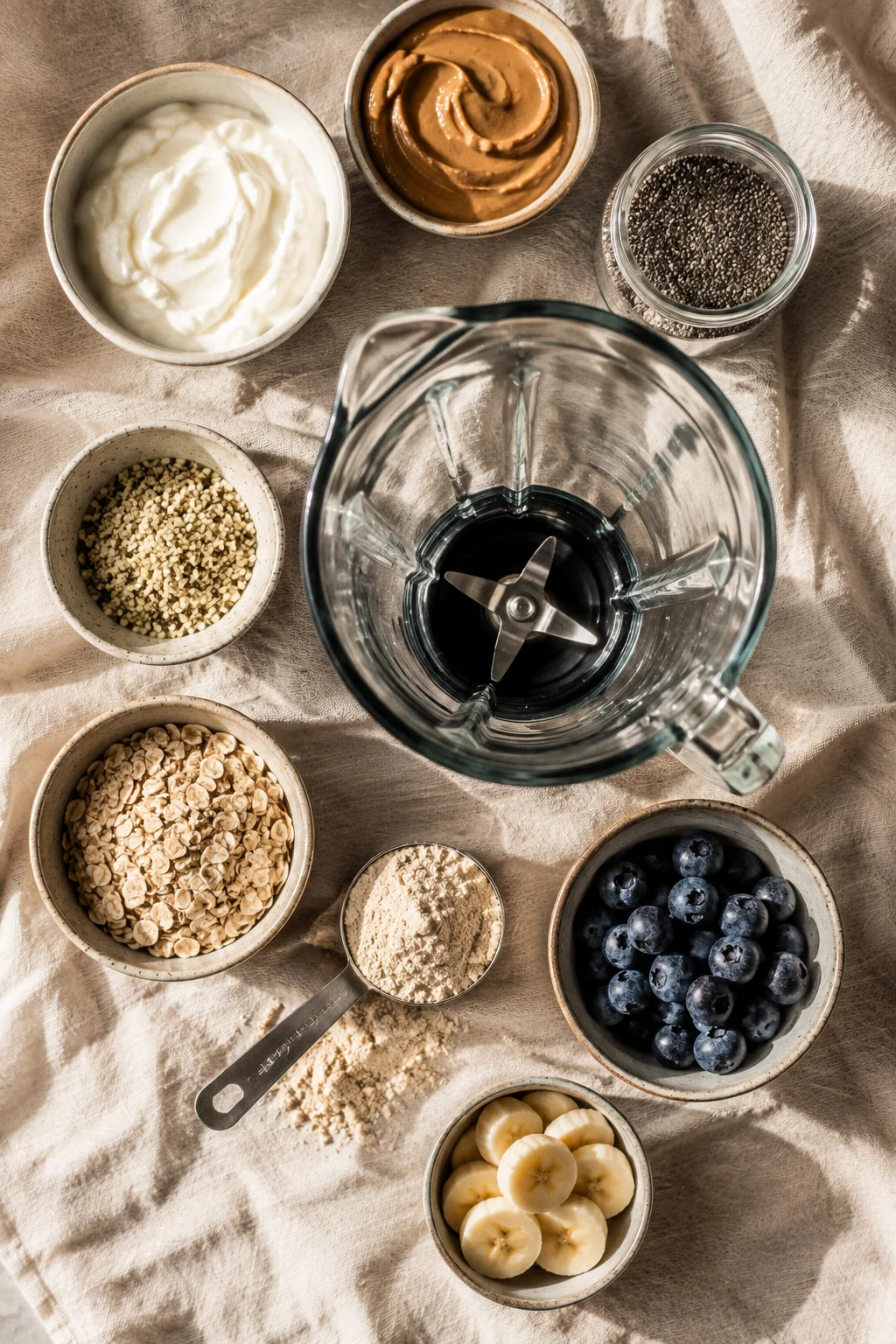
15 High Protein Breakfast Smoothies
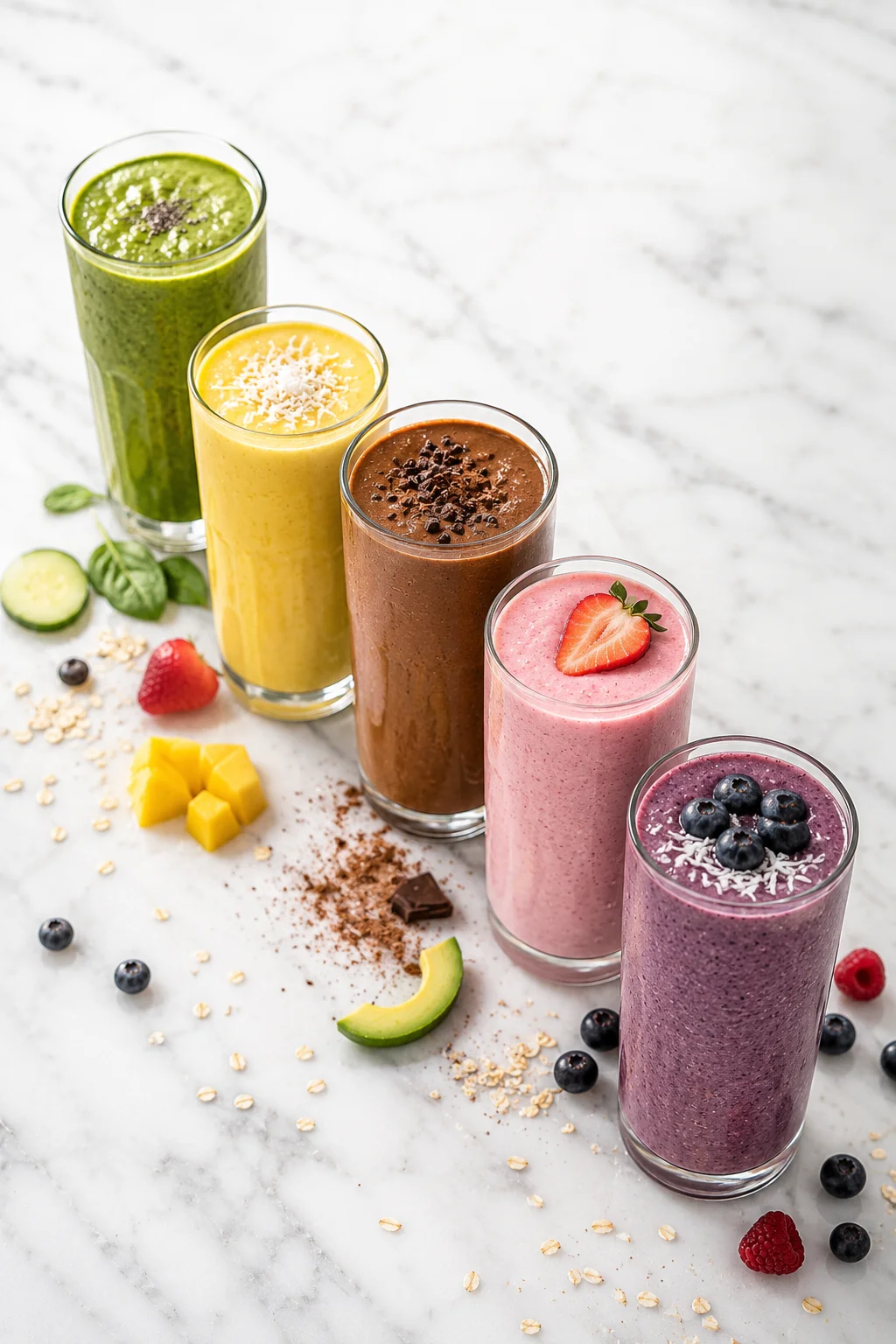
Each recipe below is designed to deliver between 20 and 35 grams of protein per serving, takes five minutes or less to blend, and includes enough fiber and healthy fat to keep you genuinely full until your next meal.
You don’t need to make all fifteen. Pick three or four that match your taste, rotate them through the week, and you’ll never feel stuck with a boring breakfast again.
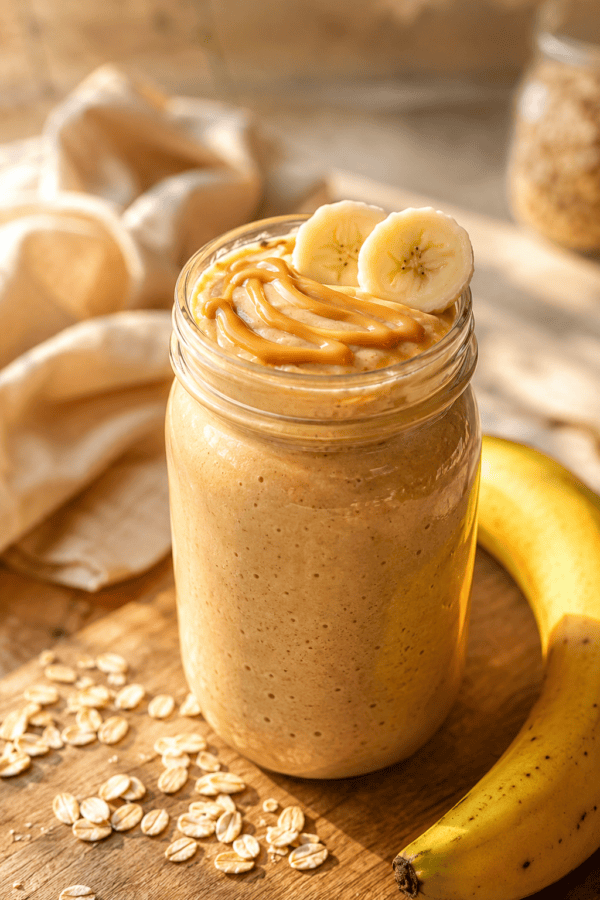
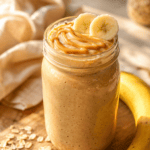
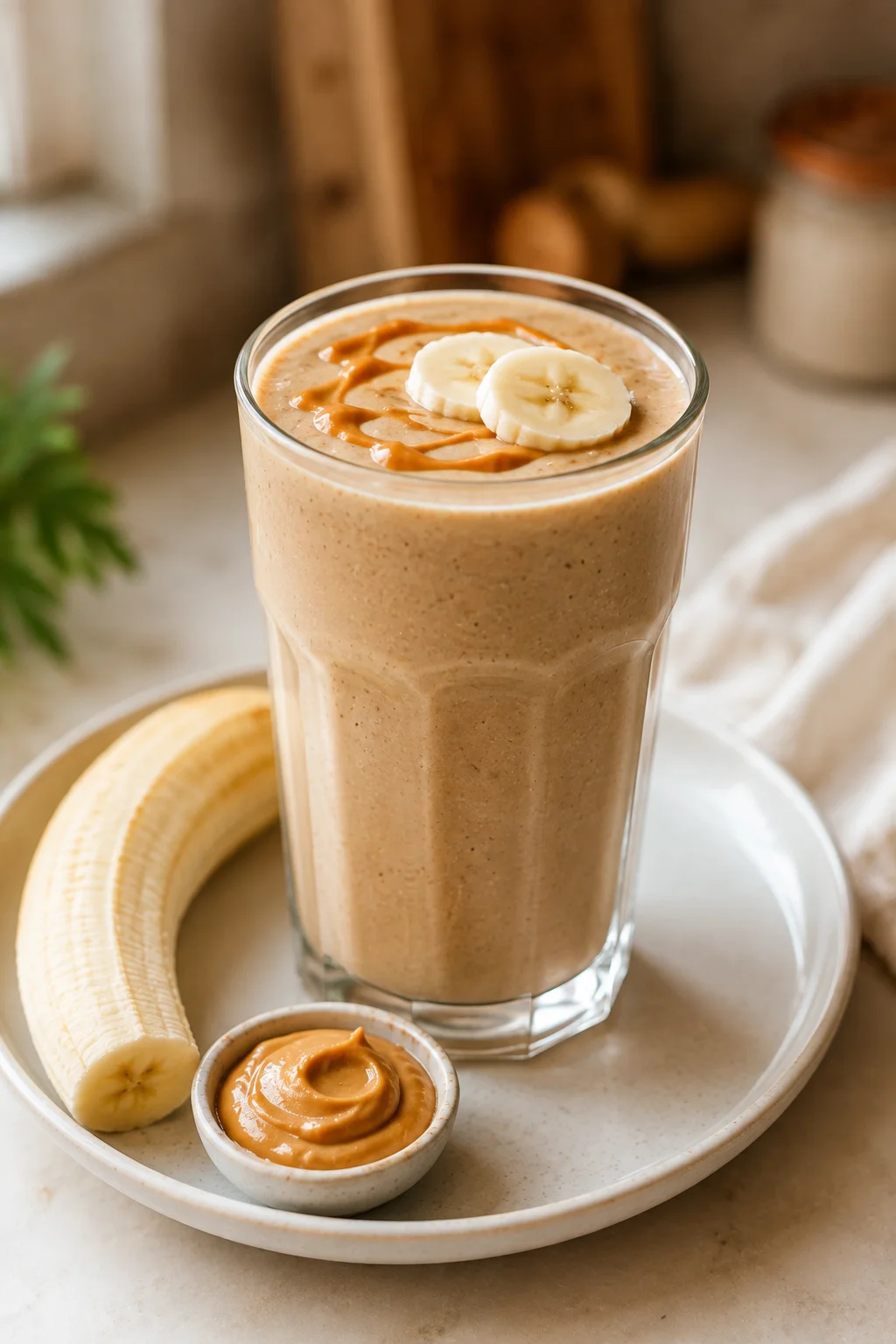
Peanut Butter Banana Protein Smoothie
The smoothie equivalent of comfort food. Ripe banana provides natural sweetness, peanut butter adds protein and healthy fat, and a scoop of Greek yogurt pushes the protein count past 25 grams without any chalky aftertaste.
- 1 ripe banana (frozen for thickness)
- 2 tablespoons natural peanut butter
- ¾ cup plain Greek yogurt
- ½ cup milk or oat milk
- 1 tablespoon rolled oats
- Pinch of cinnamon
Protein: ~27g · Prep: 3 minutes · Best For: Anyone who loves peanut butter and needs a hearty start.
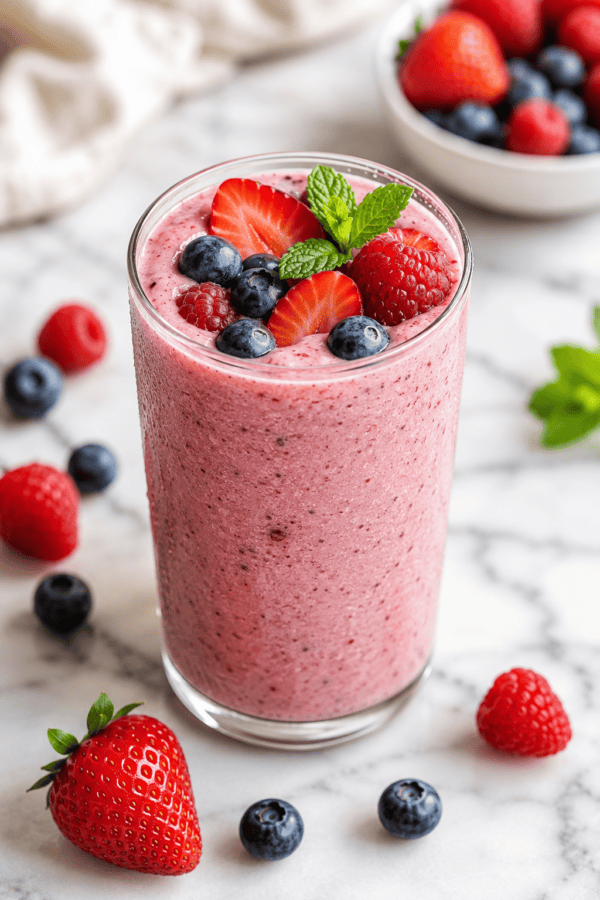
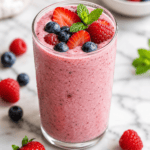
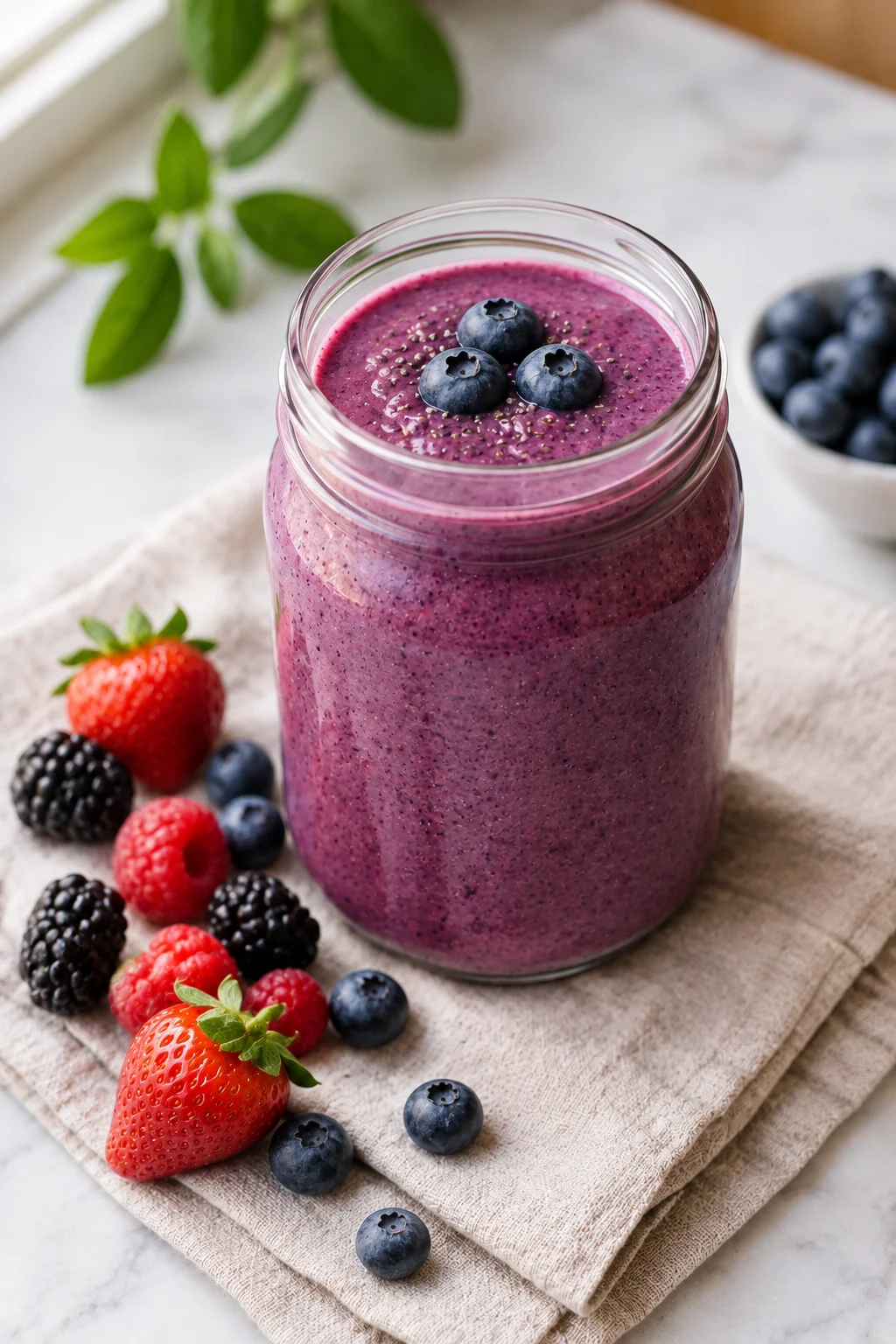
Greek Yogurt Berry Blast Smoothie
Mixed berries bring natural sweetness and antioxidants while Greek yogurt does the heavy lifting on protein. A small handful of oats adds body and keeps the texture thick enough to feel like a real meal rather than a thin juice.
- 1 cup mixed frozen berries (strawberries, blueberries, raspberries)
- ¾ cup plain Greek yogurt
- ¼ cup rolled oats
- ½ cup milk or almond milk
- 1 tablespoon chia seeds
- 1 teaspoon honey (optional)
Protein: ~24g · Prep: 4 minutes · Best For: Berry lovers who want a lighter-tasting but still filling smoothie.
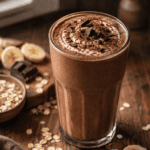
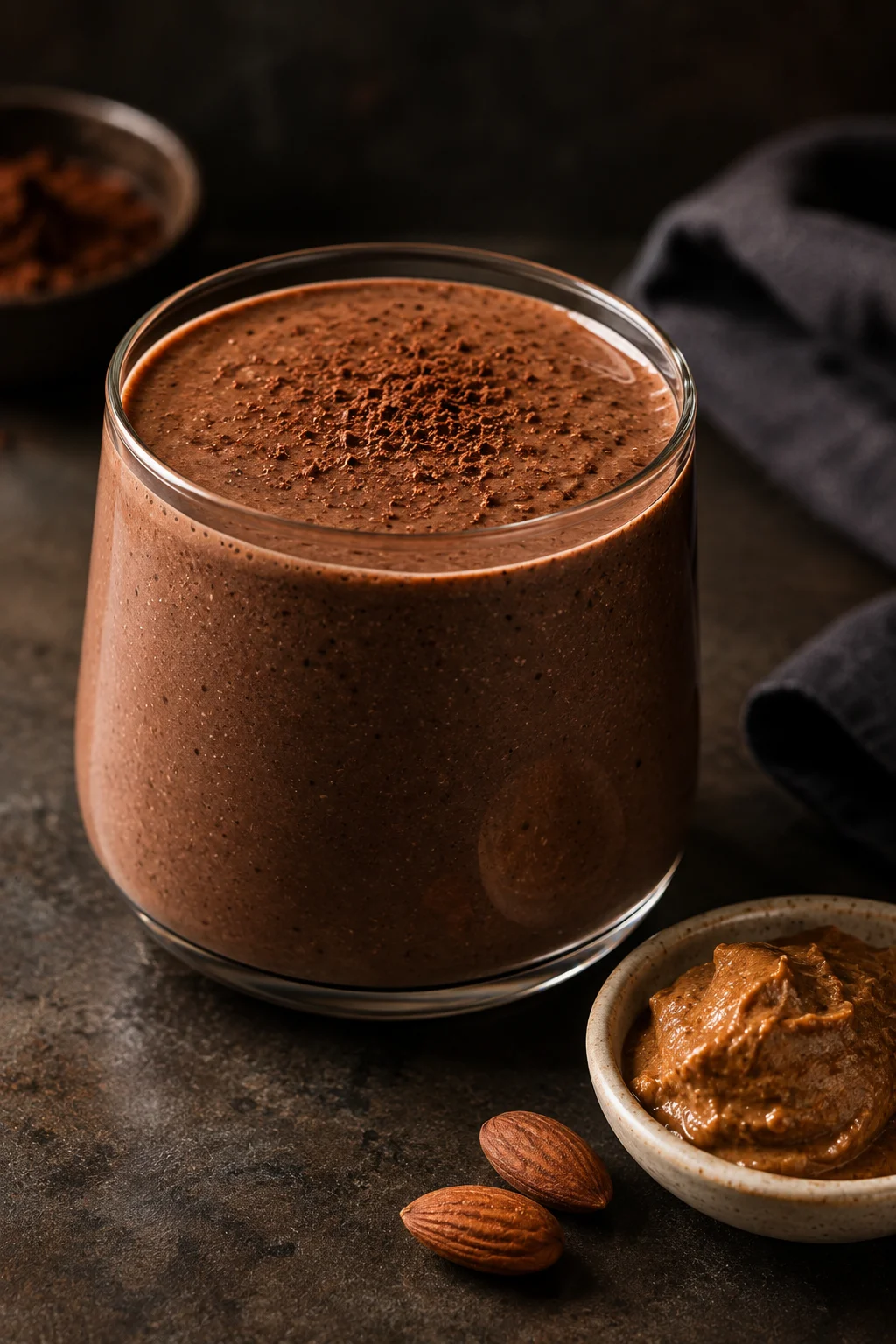
Chocolate Almond Butter Power Smoothie
For mornings when you want something that tastes almost like dessert but still fuels you properly. Unsweetened cocoa powder provides rich chocolate flavor without sugar, while almond butter and Greek yogurt deliver serious protein and healthy fat.
- 1 frozen banana
- 2 tablespoons almond butter
- 1 tablespoon unsweetened cocoa powder
- ½ cup Greek yogurt
- ¾ cup milk of choice
- 1 tablespoon ground flaxseed
- Small splash of vanilla extract
Protein: ~23g · Prep: 4 minutes · Best For: Chocolate cravings, post-workout mornings, anyone who skips breakfast because “nothing sounds good.”
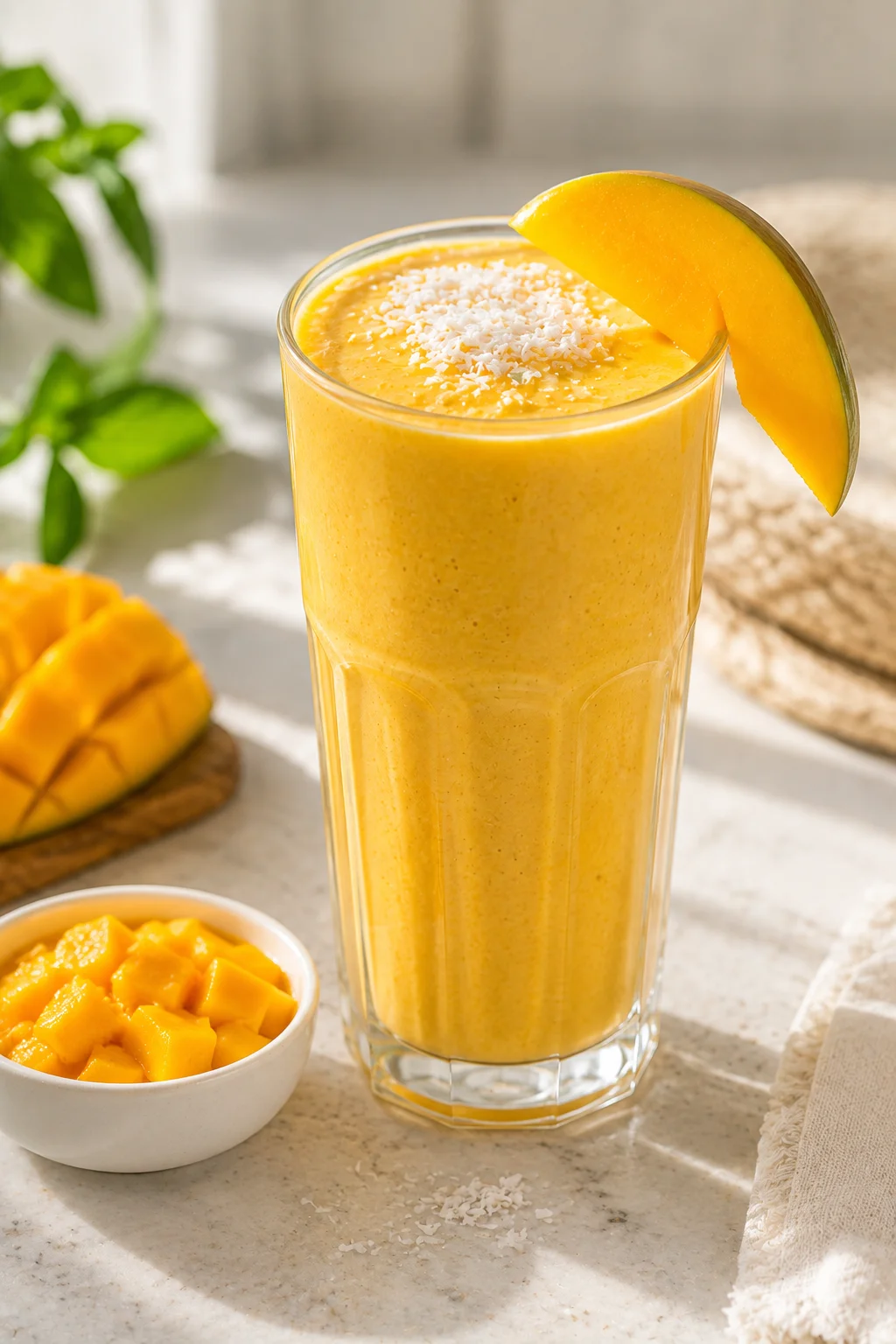
Mango Coconut Protein Smoothie
Frozen mango and a splash of coconut milk create a tropical flavor that makes Monday mornings feel less like Monday mornings. Silken tofu adds protein without altering the flavor, and a tablespoon of hemp seeds boosts the count further.
- 1 cup frozen mango chunks
- ½ ripe banana
- ½ cup silken tofu
- ¾ cup coconut milk (light)
- 1 tablespoon hemp seeds
- Squeeze of fresh lime
Protein: ~21g · Prep: 3 minutes · Best For: Dairy-free mornings, warm weather, anyone craving something bright and refreshing.
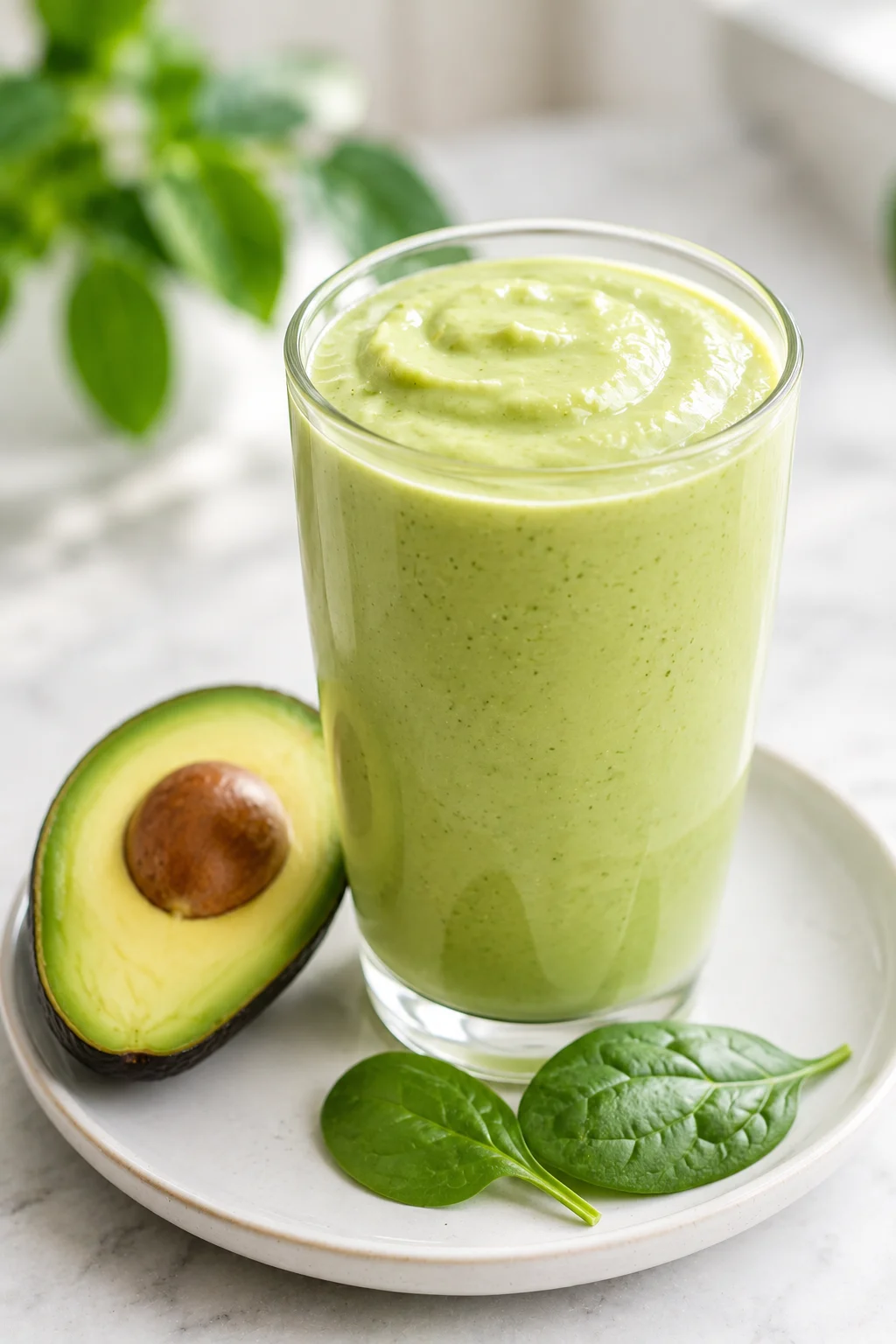
Spinach Avocado Protein Smoothie
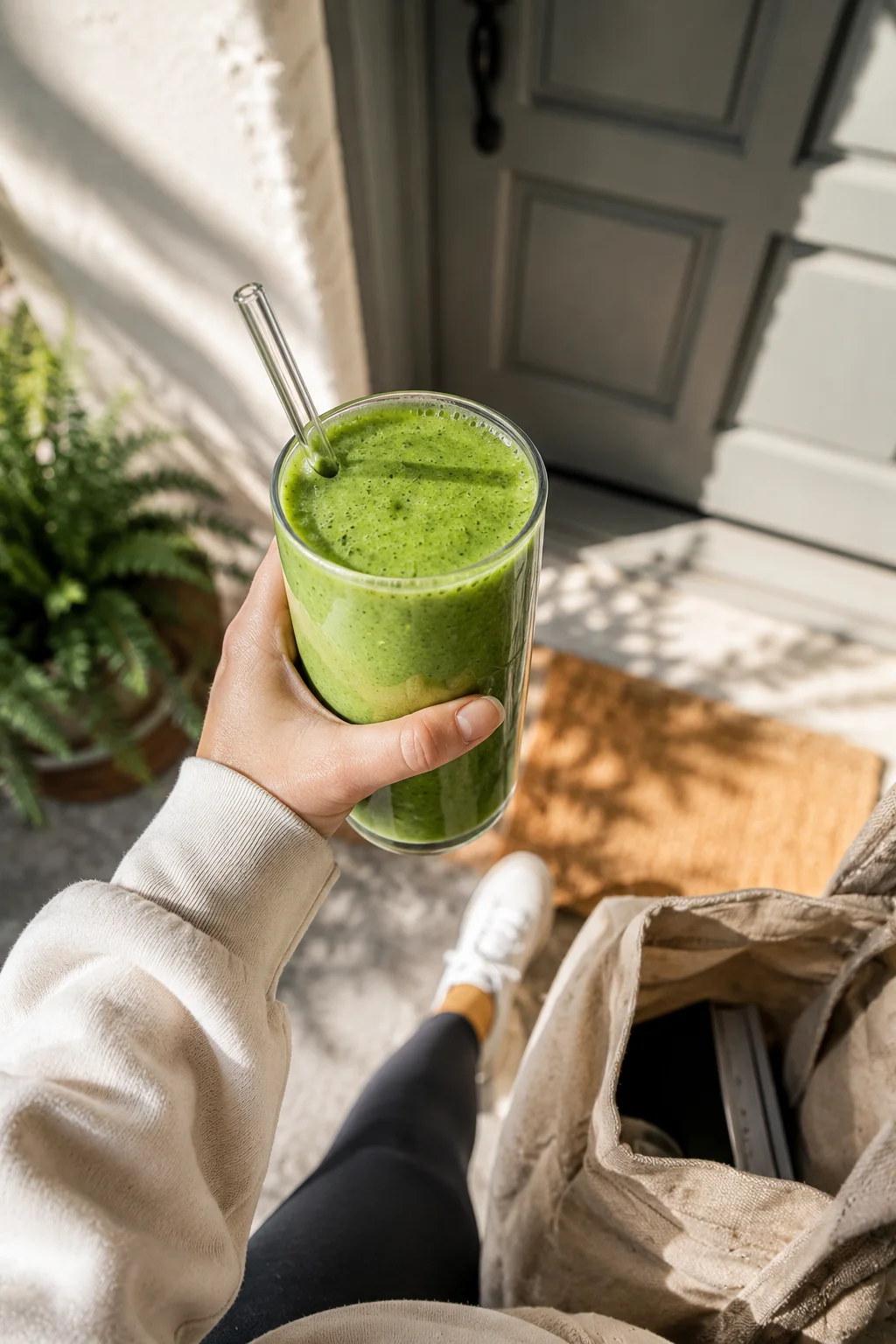
The smoothie that converts green-smoothie skeptics. You genuinely cannot taste the spinach once it’s blended with banana, avocado, and a scoop of protein powder or Greek yogurt. The avocado adds an incredibly creamy texture plus healthy fat that keeps you full for hours.
- 1 large handful fresh spinach
- ½ ripe avocado
- 1 frozen banana
- 1 scoop vanilla protein powder OR ¾ cup Greek yogurt
- ¾ cup almond milk
- 1 tablespoon chia seeds
Protein: ~28g (with protein powder) / ~22g (with yogurt) · Prep: 4 minutes · Best For: Sneaking greens into breakfast, long mornings, anyone wanting sustained energy.
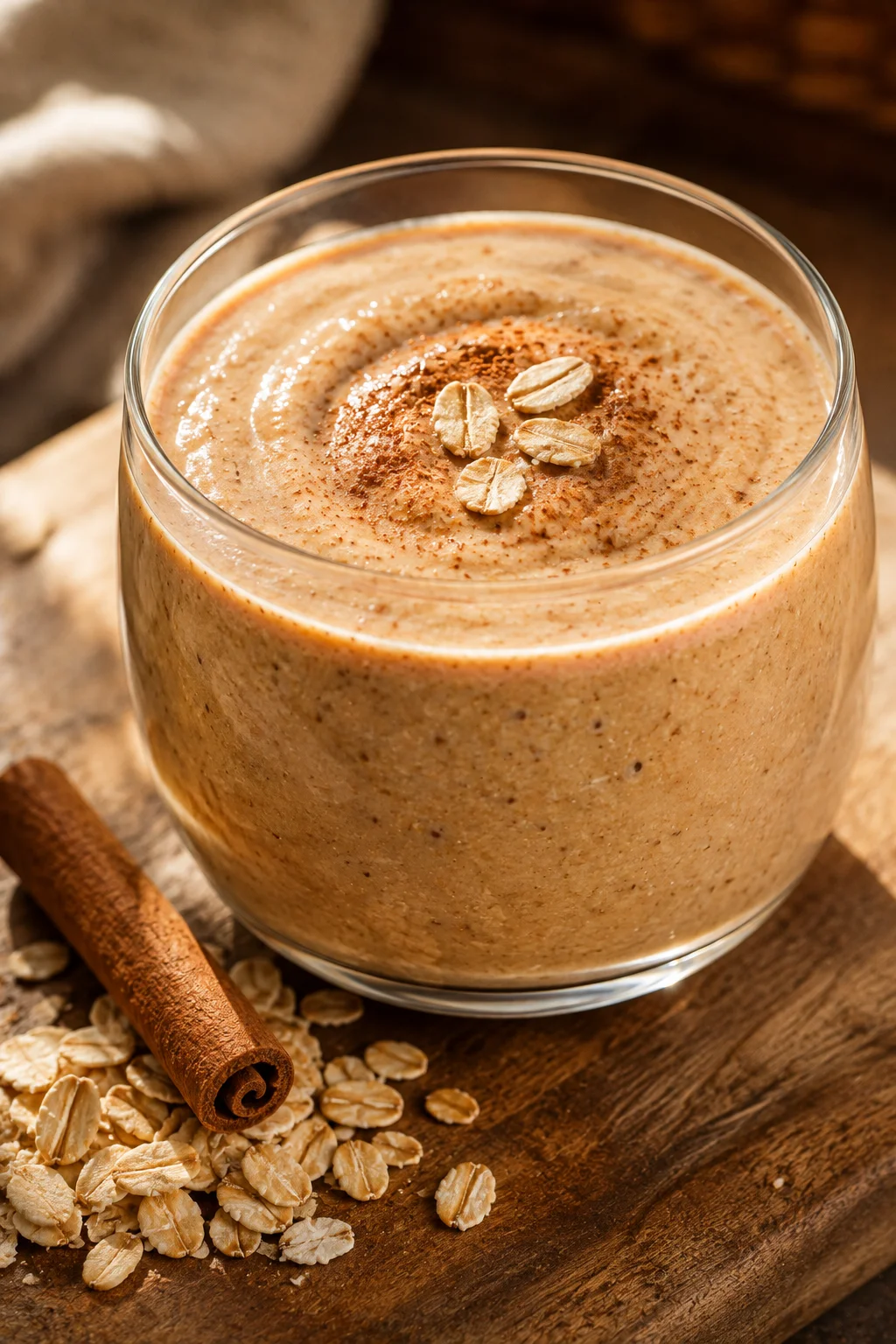
Oatmeal Cookie Protein Smoothie
Tastes like drinking a warm oatmeal cookie on a cold morning. Rolled oats provide complex carbohydrates and fiber, while cottage cheese adds a surprising creaminess and serious protein content that you absolutely cannot detect once blended.
- ½ cup rolled oats
- ½ cup cottage cheese
- 1 frozen banana
- ¾ cup milk
- 1 tablespoon almond butter
- ½ teaspoon cinnamon
- Pinch of nutmeg
- 1 teaspoon maple syrup (optional)
Protein: ~25g · Prep: 5 minutes · Best For: Cold mornings, oatmeal lovers, anyone who wants a “warm breakfast” feeling in smoothie form.
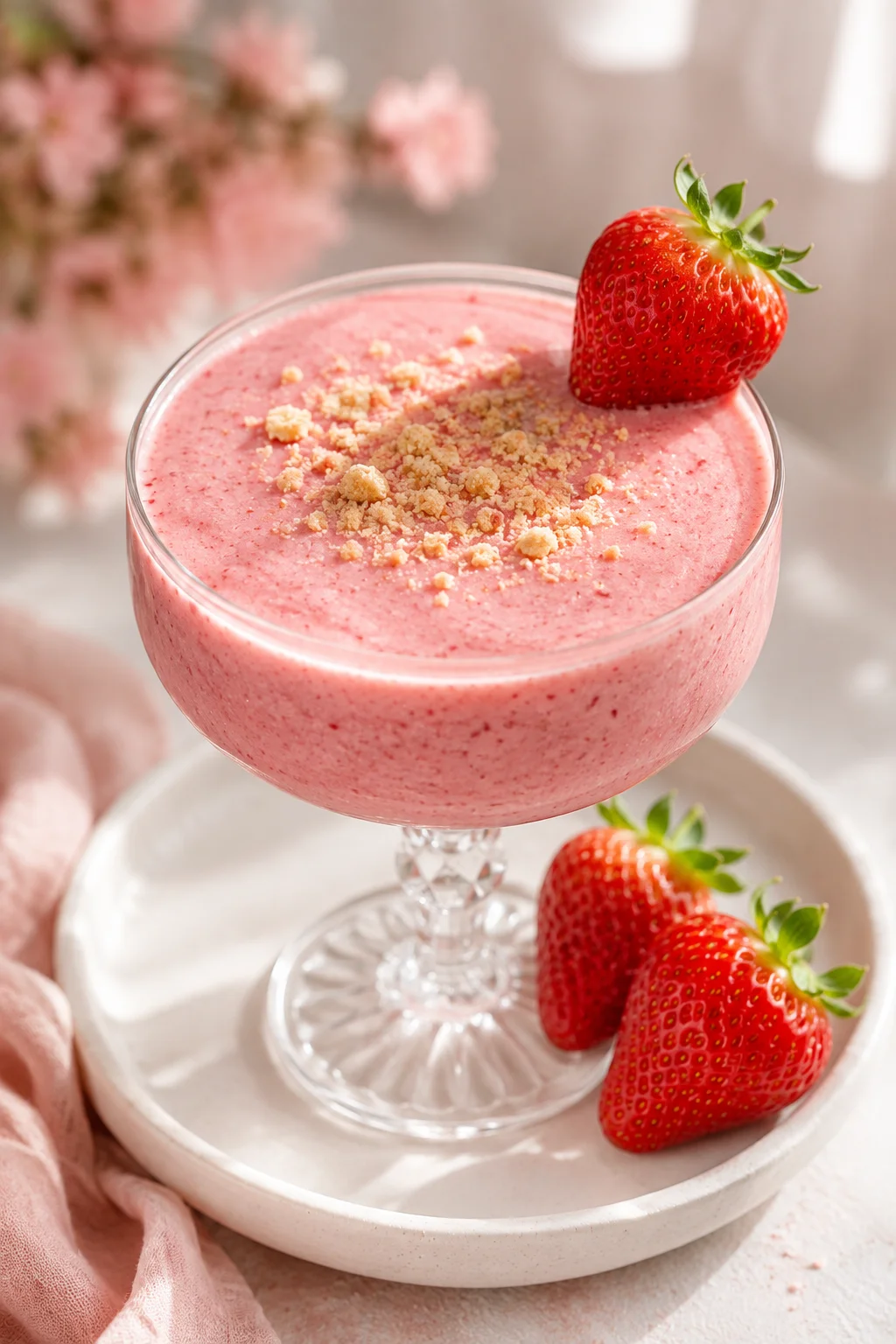
Strawberry Cheesecake Protein Smoothie
All the flavor of a strawberry cheesecake without the guilt or the three-hour wait. Cottage cheese and Greek yogurt together create a thick, tangy base that mimics cream cheese, while fresh or frozen strawberries provide natural sweetness.
- 1 cup frozen strawberries
- ½ cup cottage cheese
- ¼ cup Greek yogurt
- ½ cup milk
- ½ teaspoon vanilla extract
- 1 teaspoon honey or maple syrup
- 2 tablespoons graham cracker crumbs (optional topping)
Protein: ~26g · Prep: 4 minutes · Best For: Sweet tooths, weekend brunches, anyone who thinks healthy breakfasts can’t taste indulgent.
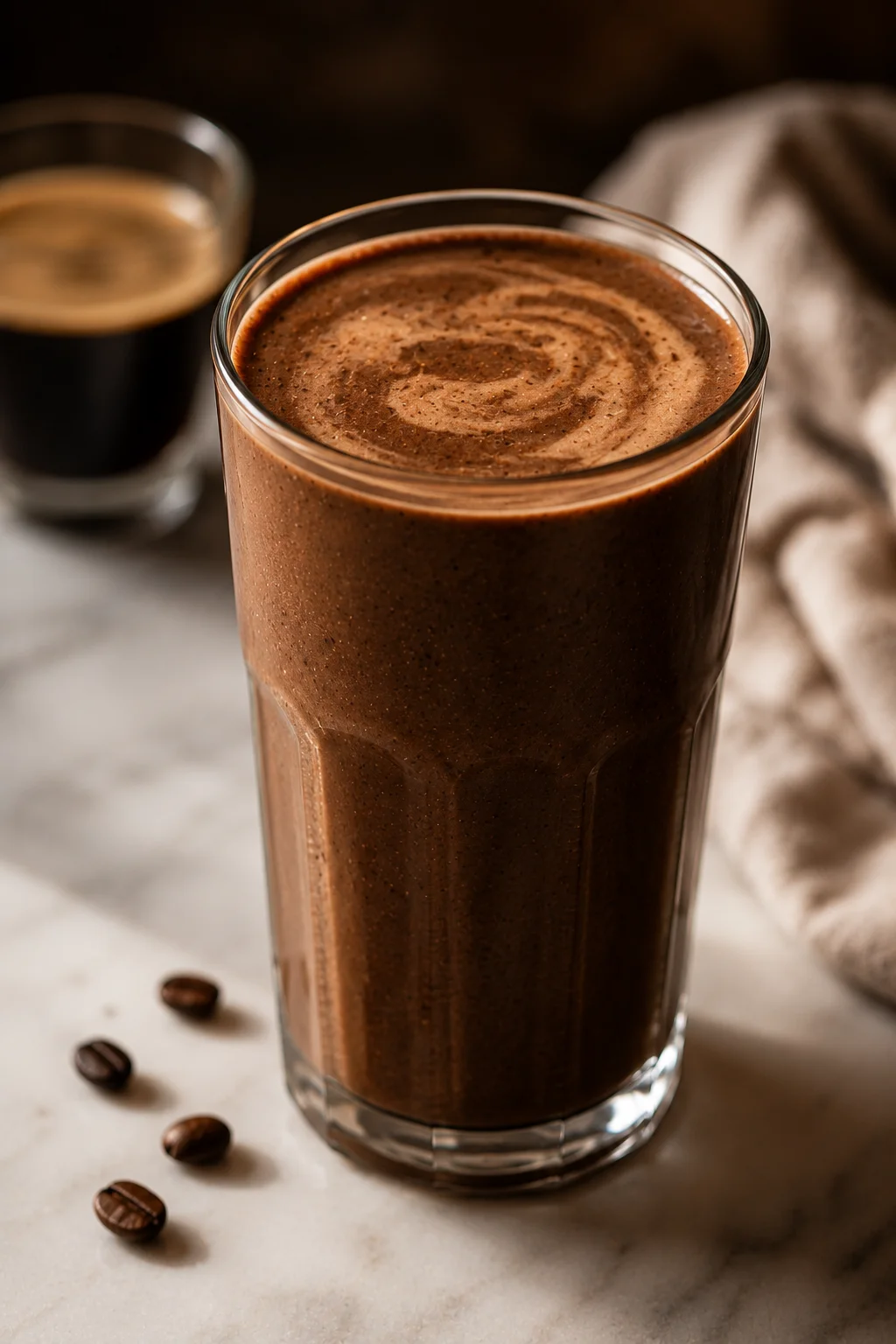
Coffee Banana Protein Smoothie
Breakfast and your morning coffee in one glass. Cold brewed coffee or chilled espresso blends beautifully with banana, oats, and a scoop of protein powder for a smoothie that wakes you up and fills you up simultaneously.
- ½ cup cold brew coffee or chilled espresso
- 1 frozen banana
- 1 scoop chocolate or vanilla protein powder
- ¼ cup rolled oats
- ½ cup milk
- 1 tablespoon almond butter
- Ice cubes (2–3)
Protein: ~30g · Prep: 4 minutes · Best For: Coffee lovers, early risers, anyone who needs caffeine and breakfast at the same time.
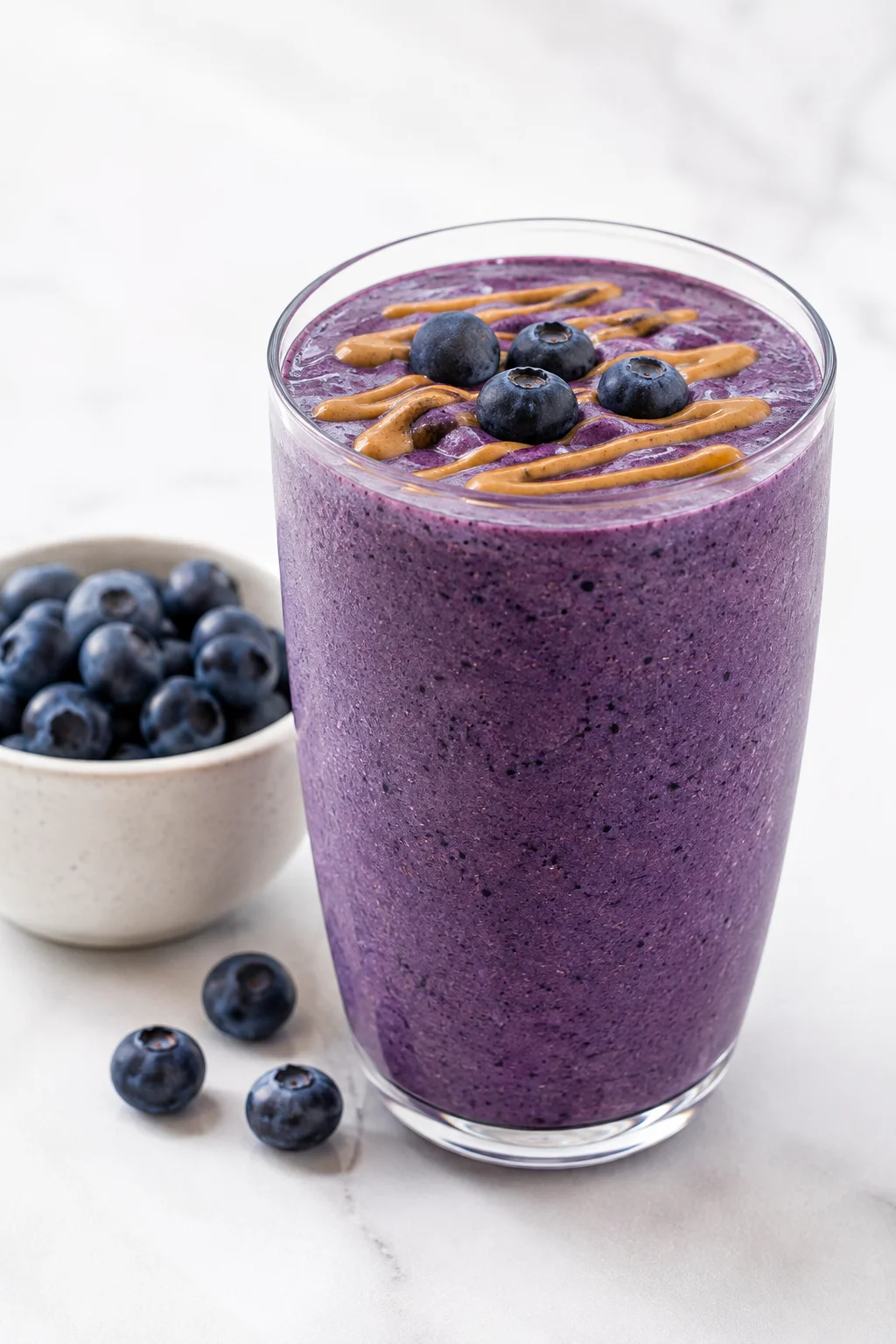
Blueberry Almond Protein Smoothie
Blueberries bring deep color and antioxidants while almond butter and Greek yogurt provide the protein backbone. A small amount of oats keeps the texture thick and the energy release slow and steady.
- 1 cup frozen blueberries
- ¾ cup Greek yogurt
- 1 tablespoon almond butter
- ¼ cup rolled oats
- ¾ cup almond milk
- 1 teaspoon honey (optional)
Protein: ~23g · Prep: 3 minutes · Best For: Antioxidant-focused mornings, light but filling breakfasts, blueberry fans.
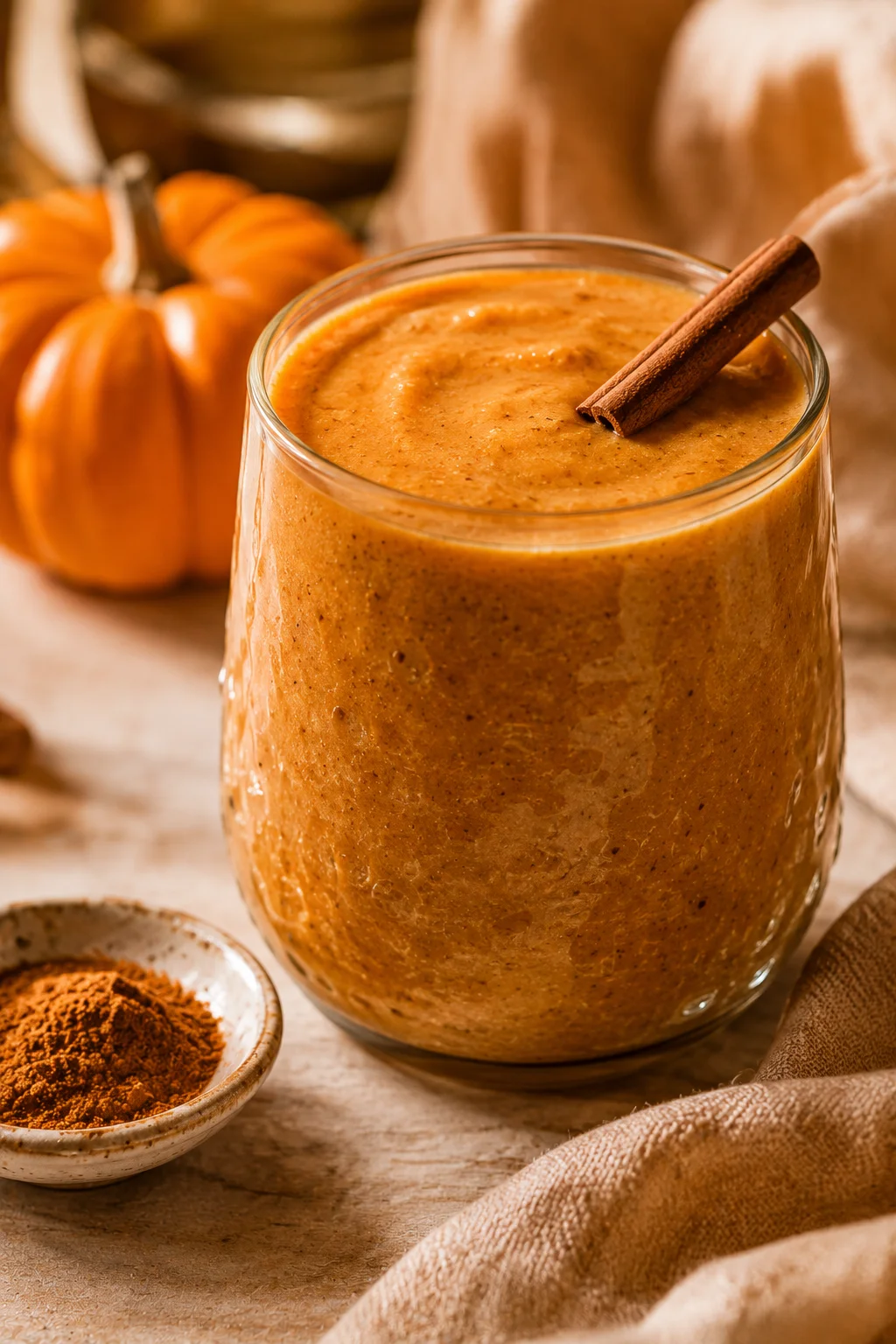
Pumpkin Spice Protein Smoothie
When cooler weather arrives, this smoothie satisfies the pumpkin spice craving without the sugar overload of coffee-shop versions. Pumpkin puree adds natural creaminess and vitamin A, while Greek yogurt and a touch of maple syrup round out the flavor.
- ⅓ cup pure pumpkin puree
- ¾ cup Greek yogurt
- 1 frozen banana
- ¾ cup milk
- ½ teaspoon pumpkin pie spice
- 1 tablespoon ground flaxseed
- 1 teaspoon maple syrup
Protein: ~22g · Prep: 4 minutes · Best For: Fall mornings, pumpkin spice lovers, cozy seasonal breakfasts.
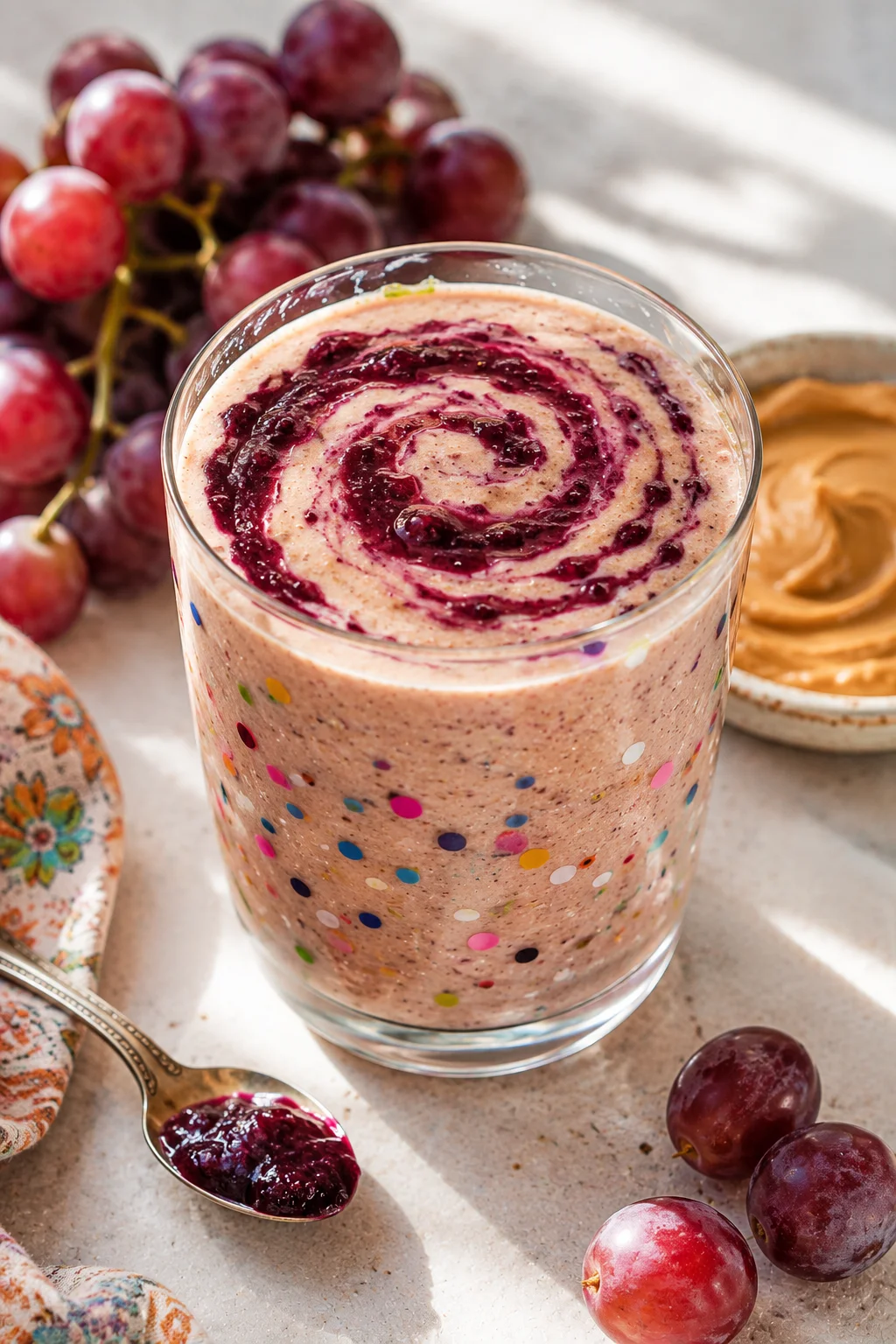
Peanut Butter & Jelly Protein Smoothie
Your childhood lunchbox favorite in smoothie form. Grape or strawberry jam provides the “jelly” sweetness, peanut butter brings protein and healthy fat, and Greek yogurt makes the whole thing creamy and satisfying.
- 1 frozen banana
- 2 tablespoons peanut butter
- 2 tablespoons grape jam or crushed strawberries
- ¾ cup Greek yogurt
- ½ cup milk
- 1 tablespoon chia seeds
Protein: ~25g · Prep: 3 minutes · Best For: PB&J lovers, quick grab-and-go mornings, kids transitioning to protein-rich breakfasts.
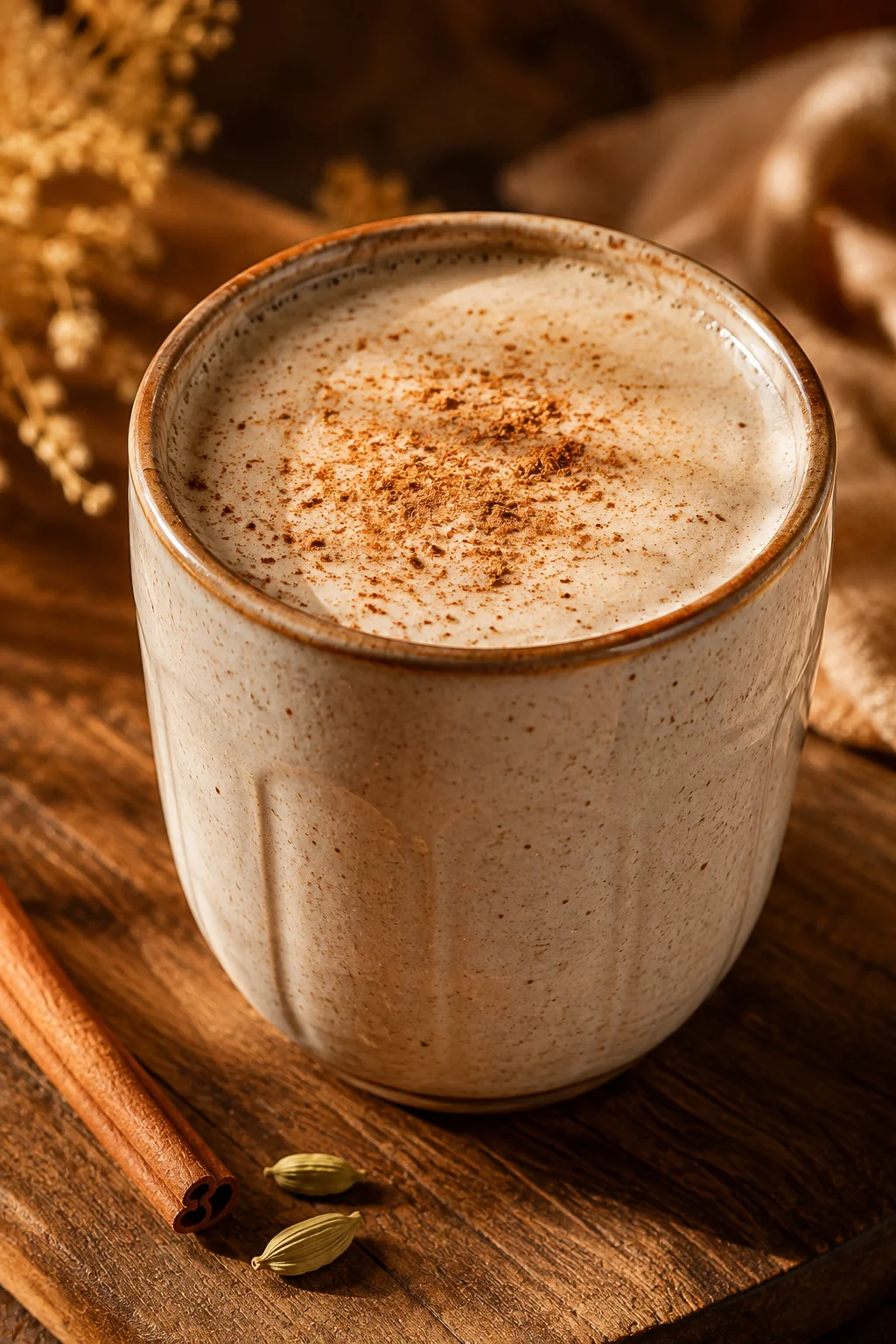
Vanilla Chai Protein Smoothie
Inspired by the warm spices of chai tea without any caffeine. Cinnamon, cardamom, and ginger blend into a creamy vanilla base with Greek yogurt for a smoothie that feels like a cozy hug on a chilly morning.
- 1 frozen banana
- ¾ cup Greek yogurt
- ¾ cup milk (oat milk works beautifully)
- ½ teaspoon vanilla extract
- ¼ teaspoon cinnamon
- Tiny pinch of cardamom and ginger
- 1 tablespoon almond butter
- 1 teaspoon maple syrup
Protein: ~22g · Prep: 4 minutes · Best For: Spice lovers, caffeine-free mornings, anyone wanting a warming breakfast without coffee.
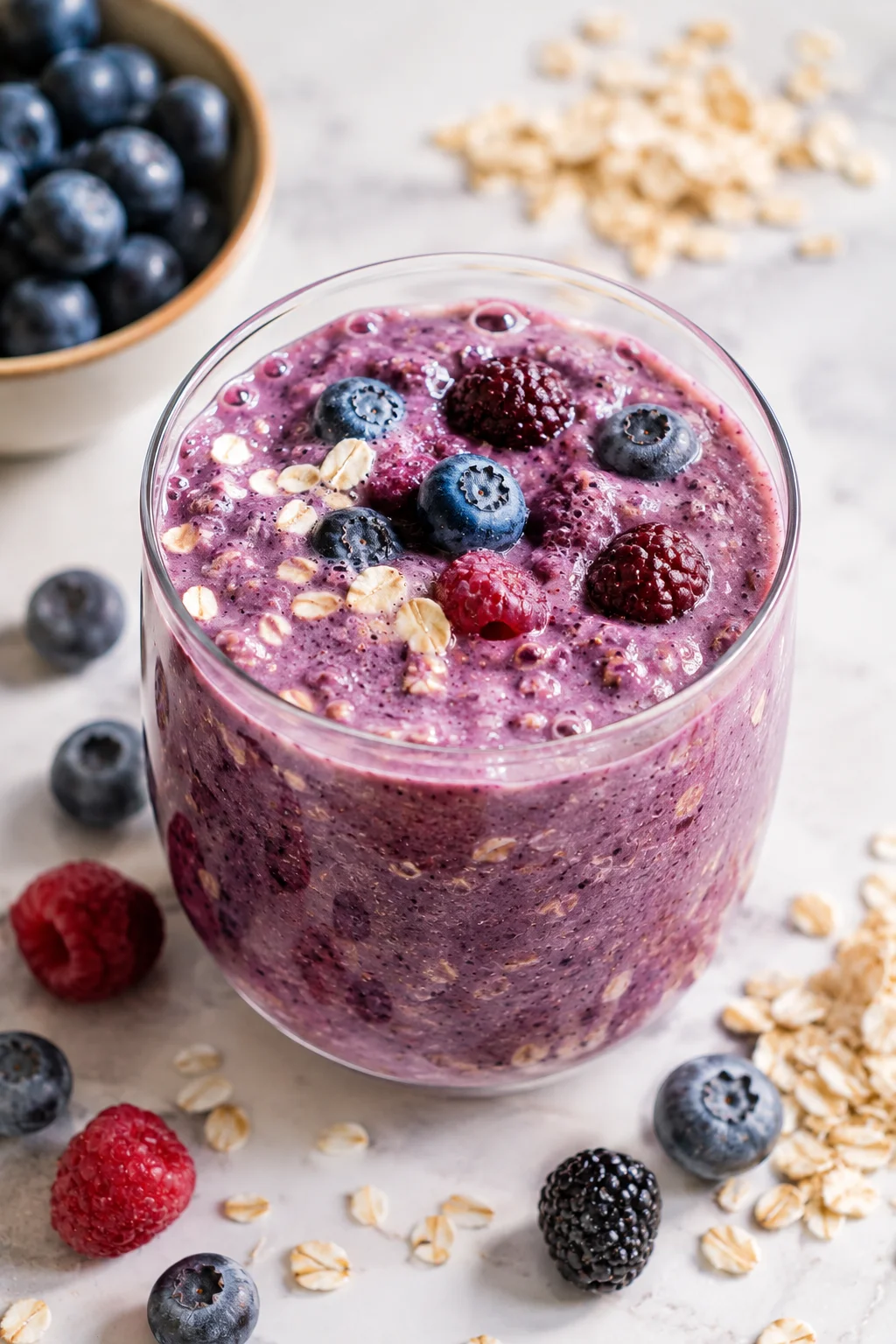
Mixed Berry Oat Protein Smoothie
This one leans heavier on the “meal replacement” side. A full half-cup of oats plus mixed berries and Greek yogurt creates a thick, hearty smoothie that genuinely feels like eating breakfast rather than just drinking it.
- ½ cup rolled oats
- 1 cup mixed frozen berries
- ¾ cup Greek yogurt
- ¾ cup milk
- 1 tablespoon ground flaxseed
- 1 teaspoon honey
Protein: ~24g · Prep: 4 minutes · Best For: Very hungry mornings, meal-replacement needs, anyone who skips lunch and needs breakfast to last.
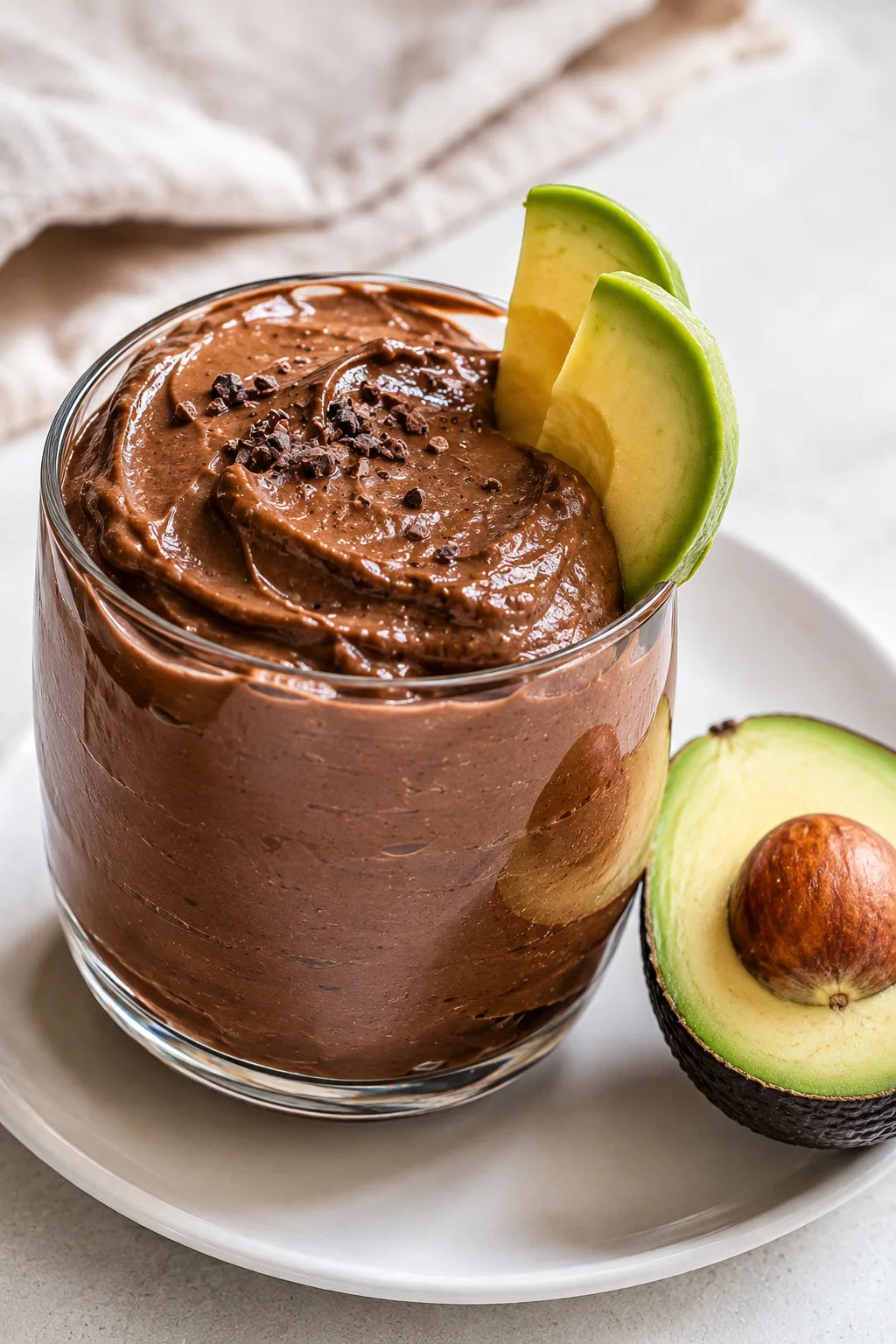
Chocolate Avocado Protein Smoothie
Avocado makes everything creamier, and in a chocolate smoothie, it creates a texture almost like chocolate pudding. Combined with protein powder or Greek yogurt, this becomes one of the most satisfying options in the entire list.
- ½ ripe avocado
- 1 frozen banana
- 1 scoop chocolate protein powder OR ¾ cup Greek yogurt
- 1 tablespoon unsweetened cocoa powder
- 1 cup milk of choice
- 1 teaspoon maple syrup
- Pinch of salt
Protein: ~28g (with powder) / ~21g (with yogurt) · Prep: 4 minutes · Best For: Ultra-creamy texture lovers, healthy fat seekers, anyone wanting pudding-like thickness.
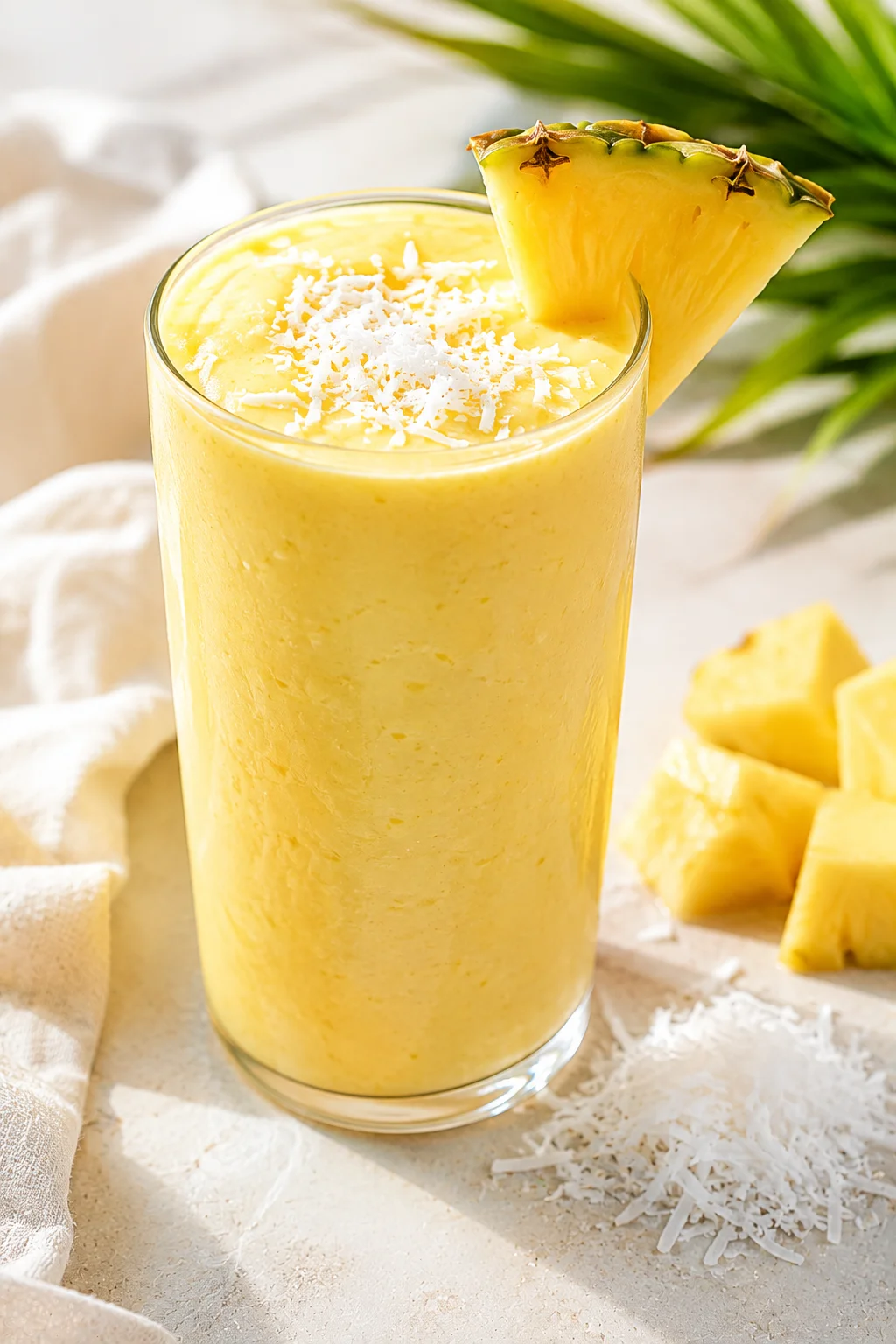
Coconut Pineapple Protein Smoothie
A bright, refreshing option for warm mornings or anyone who prefers lighter flavors. Coconut milk provides healthy fat, silken tofu adds protein without heaviness, and frozen pineapple gives natural tropical sweetness.
- 1 cup frozen pineapple chunks
- ½ banana
- ½ cup silken tofu
- ¾ cup light coconut milk
- 1 tablespoon shredded coconut
- 1 tablespoon hemp seeds
- Squeeze of lime
Protein: ~20g · Prep: 3 minutes · Best For: Warm weather, dairy-free needs, anyone wanting a lighter but still protein-rich start.
Quick Comparison: Which Smoothie Fits Your Morning?
Save or screenshot this table for easy weekly planning.
| Smoothie | Protein | Prep | Dairy-Free | Best For |
|---|---|---|---|---|
| PB Banana | 27g | 3 min | ✔ (use oat milk) | Hearty mornings |
| Berry Blast | 24g | 4 min | ✔ (use almond milk) | Light & fresh |
| Choc Almond | 23g | 4 min | ✔ | Chocolate cravings |
| Mango Coconut | 21g | 3 min | ✔ | Tropical / dairy-free |
| Spinach Avocado | 22–28g | 4 min | ✔ | Greens + energy |
| Oatmeal Cookie | 25g | 5 min | ✘ | Cozy / cold mornings |
| Strawberry Cheesecake | 26g | 4 min | ✘ | Sweet treat |
| Coffee Banana | 30g | 4 min | ✔ | Caffeine + breakfast |
| Blueberry Almond | 23g | 3 min | ✔ | Antioxidants |
| Pumpkin Spice | 22g | 4 min | ✔ | Fall / seasonal |
| PB & Jelly | 25g | 3 min | ✔ | Nostalgia / kids |
| Vanilla Chai | 22g | 4 min | ✔ | Spice lovers |
| Berry Oat | 24g | 4 min | ✔ | Meal replacement |
| Choc Avocado | 21–28g | 4 min | ✔ | Ultra-creamy |
| Coconut Pineapple | 20g | 3 min | ✔ | Light / warm weather |
7 Tips to Make Any Smoothie More Filling
Even a well-balanced smoothie can be improved with a few small adjustments. These tips help you maximize satiety from any recipe.
- Add a tablespoon of nut butter. The healthy fat slows digestion significantly and adds 3–4 grams of extra protein.
- Include rolled oats or chia seeds. Soluble fiber absorbs liquid and expands in your stomach, creating physical fullness.
- Use frozen banana instead of ice. It thickens the smoothie naturally while adding potassium and slow-release carbohydrates.
- Don’t skip the protein source. Fruit alone won’t sustain you. Always include yogurt, tofu, protein powder, or nut butter as a base.
- Blend oats before adding liquids. This creates a smoother texture and prevents gritty chunks.
- Drink slowly if possible. Gulping a smoothie in 30 seconds gives your brain less time to register fullness.
- Pair with a small solid food. A hard-boiled egg, a few nuts, or a piece of toast alongside your smoothie extends satiety even further.
Common Mistakes That Make Smoothies Less Filling
Avoid these frequent errors that turn a potentially satisfying breakfast into a quick sugar spike followed by hunger.
- Too much fruit, not enough protein. Three bananas and no yogurt is basically a sugar drink.
- Skipping healthy fat entirely. Fat slows digestion. Without it, everything passes through too quickly.
- Using only water as the liquid base. Water adds zero protein or satiety. Use milk, soy milk, or at least coconut milk.
- Over-relying on fruit juice. Juice adds sugar without fiber. Whole fruit or milk is always better.
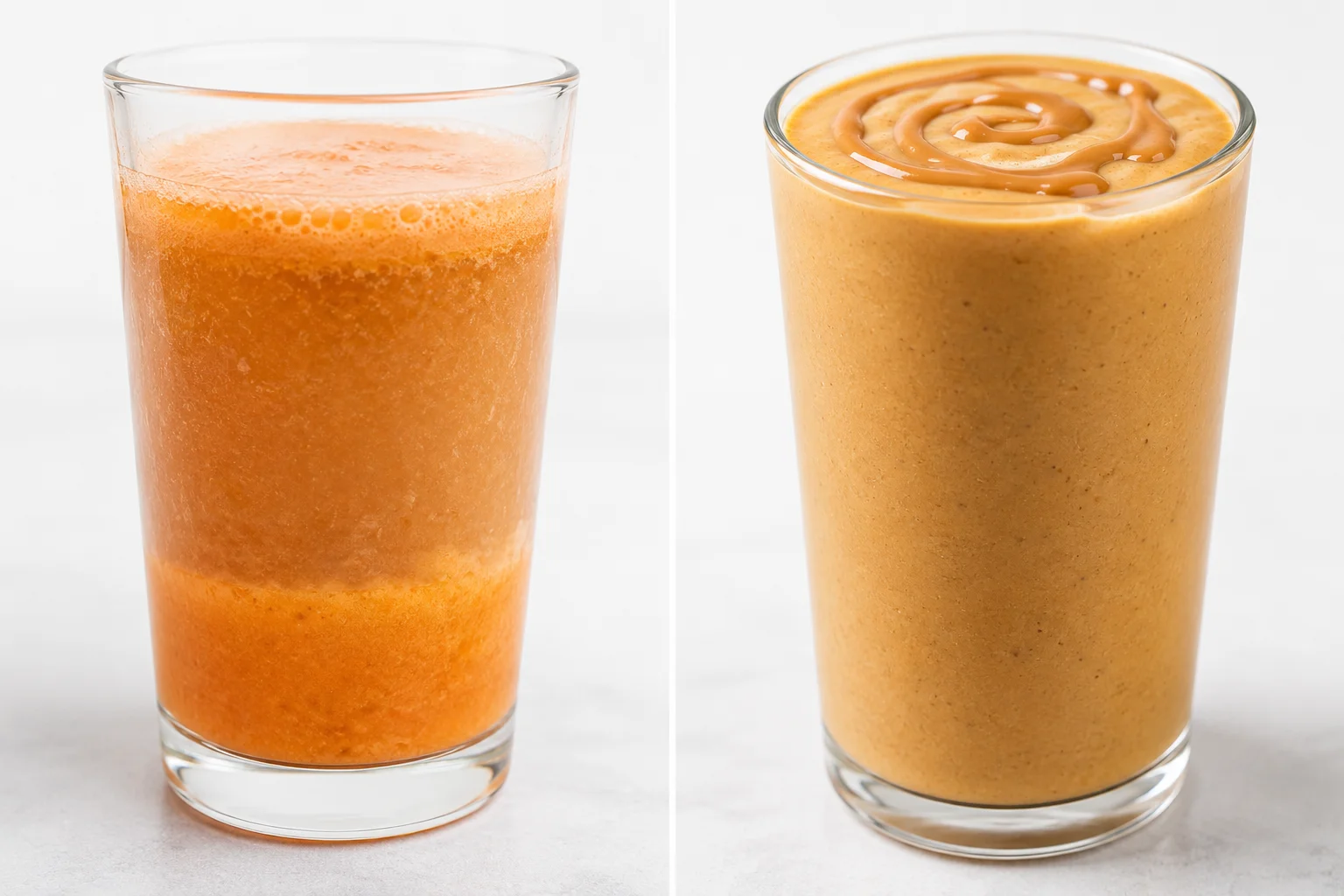
- Making it too thin. A watery smoothie feels less satisfying than a thick one, even with identical calories.
- Drinking it too fast. Give your body at least 10–15 minutes to register what you’ve consumed.
- Ignoring protein powder quality. Cheap powders can taste chalky and may not dissolve well. If you use powder, choose one you actually enjoy.
- Not adjusting for your activity level. A sedentary morning needs less fuel than a pre-workout smoothie. Scale portions accordingly.
A Good Blender Makes All the Difference
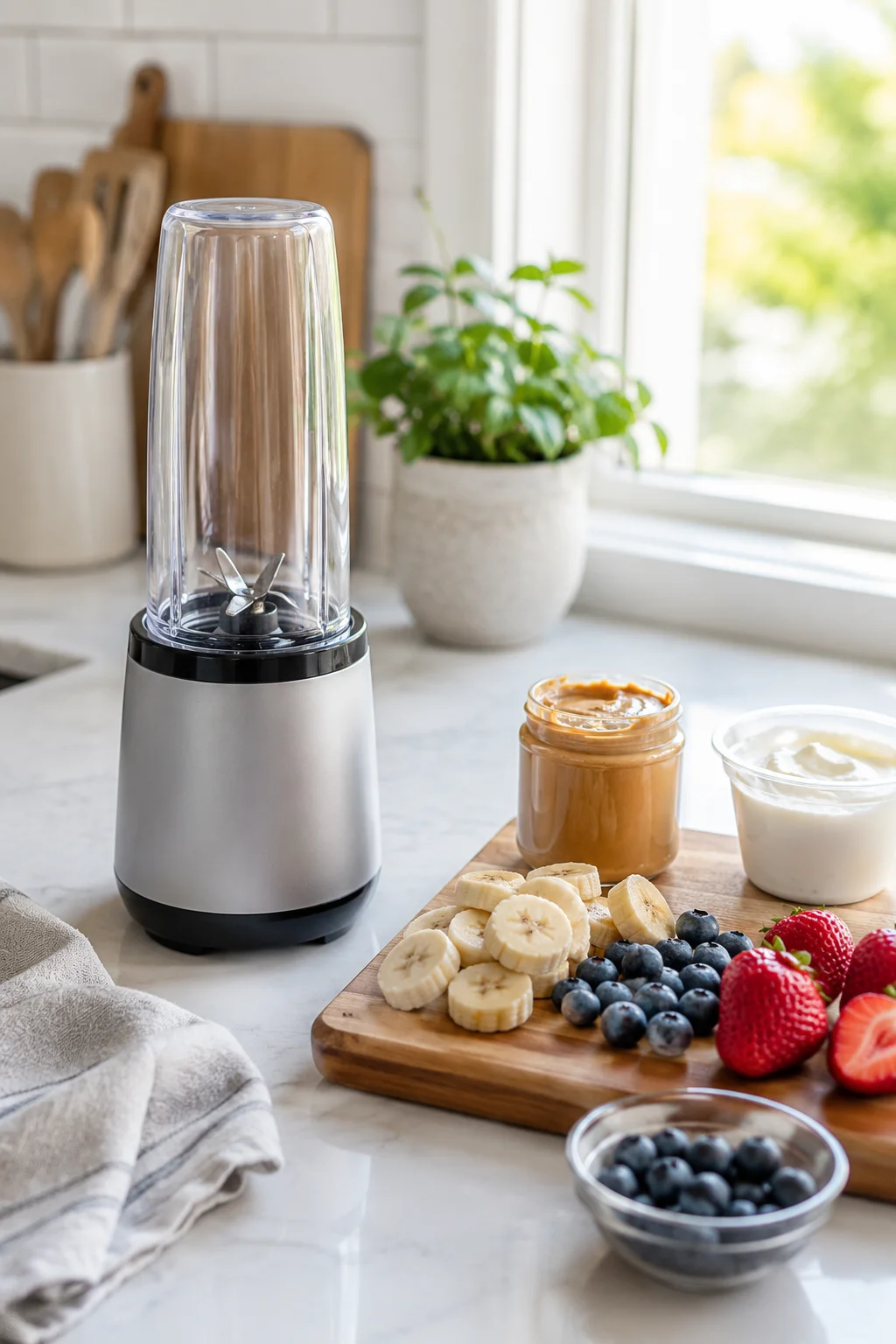
You don’t need a $500 machine to make great smoothies, but a quality personal blender does make mornings faster and textures smoother. The key features to look for: enough power to handle frozen fruit and ice, a wide enough opening for easy cleaning, and a leak-proof lid for taking your smoothie on the go.
Best Overall Personal Blender
The Ninja Fit Compact Personal Blender handles frozen fruit, ice, and thick ingredients like nut butter and oats with ease. Its compact size fits on any counter, and the blending cups double as to-go containers with leak-proof lids.
Check Price on AmazonIdeal for daily smoothies, protein shakes, and frozen fruit blends.
Budget-Friendly Pick
The KOIOS 900W Personal Blender offers strong blending power at a lower price point. It handles oats, frozen berries, and nut butters smoothly, and the personal cup design means fewer dishes to wash.
Check Price on AmazonGreat value for families making smoothies several times per week.
On-the-Go Option
If your mornings involve commuting, a cordless portable blender lets you blend at the office, gym, or anywhere else. The Portable Blender with USB charging handles most smoothie ingredients and fits in a standard bag.
Check Price on AmazonBest for softer ingredients and pre-chopped frozen fruit.
Storage & Meal Prep Tips
You don’t have to make a fresh smoothie every single morning. A little preparation the night before saves time and reduces decision fatigue.
Make-Ahead Options
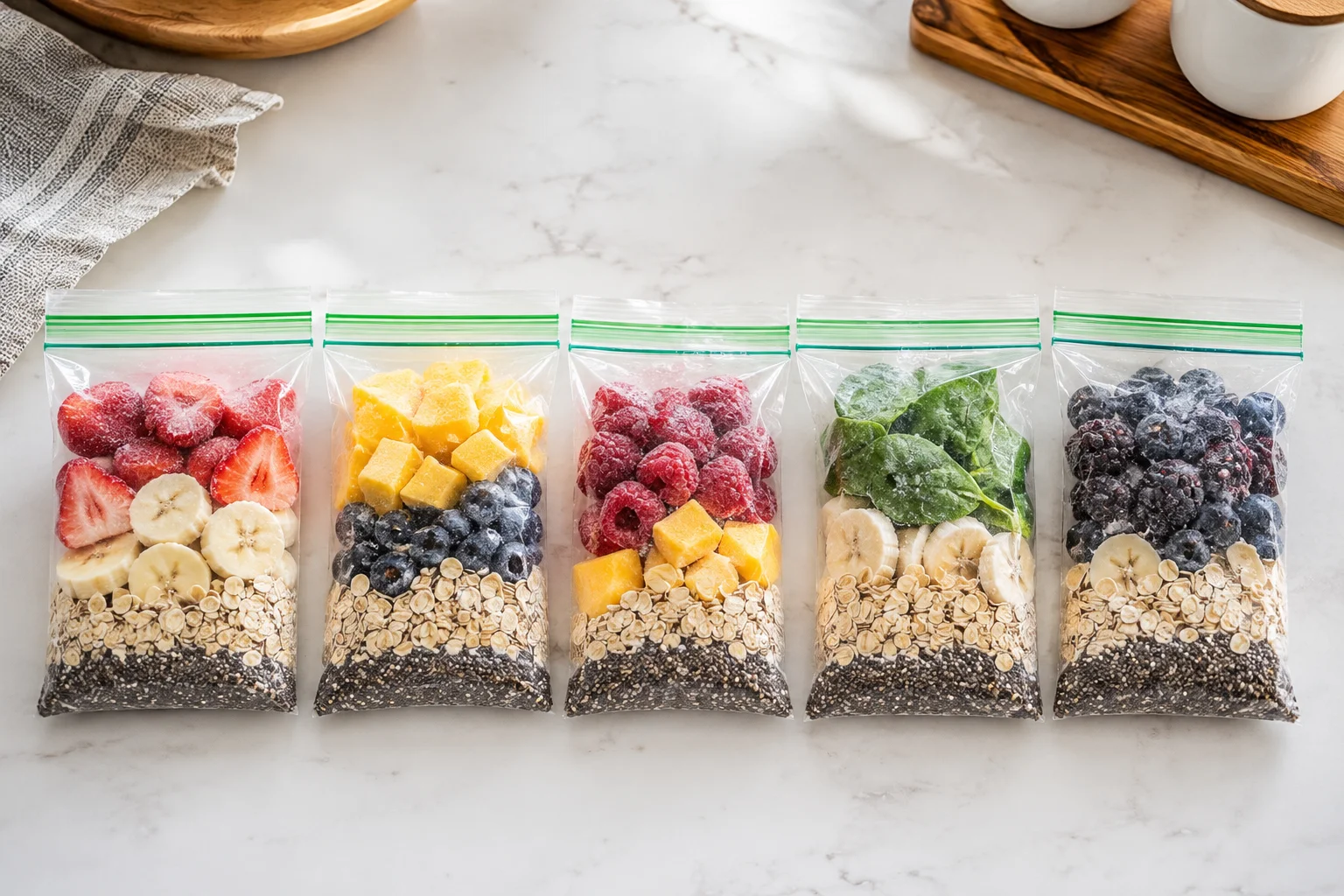
- Freezer Packs: Portion your solid ingredients (frozen fruit, oats, seeds) into individual freezer bags. In the morning, dump one bag into the blender, add your liquid and protein source, and blend.
- Overnight Smoothie Jars: Layer oats, chia seeds, and fruit in a mason jar with liquid the night before. In the morning, add yogurt or protein powder and blend.
- Batch Blend & Refrigerate: Make two servings at once. Store the extra in a sealed jar in the fridge for up to 24 hours. Shake well before drinking.
Storage Guidelines
- Refrigerated smoothies are best within 24 hours. Some separation is normal—just shake or stir.
- Freezer smoothie packs last up to 3 months.
- Smoothies with avocado are best consumed immediately as avocado oxidizes quickly.
- Smoothies with citrus should be consumed within a few hours for the freshest flavor.
Frequently Asked Questions
How much protein do I actually need in a breakfast smoothie to feel full?
Most people feel genuinely satisfied for four to six hours with 20–30 grams of protein in their smoothie, especially when paired with healthy fat and fiber. Below 15 grams, hunger typically returns within two hours regardless of how thick or large the smoothie appears.
Can I make these smoothies without protein powder?
Absolutely. Greek yogurt, cottage cheese, silken tofu, nut butters, hemp seeds, and oats all provide meaningful protein without any powder. Several recipes in this guide are designed specifically for whole-food protein sources. For a full guide, see our upcoming High Protein Smoothies Without Protein Powder article.
Will these smoothies keep me full for four to six hours?
Yes, provided they contain adequate protein (20g+), some healthy fat, and fiber. The combination slows digestion significantly. However, individual metabolism, activity level, and portion size all play a role. If you find yourself hungry sooner, try adding an extra tablespoon of nut butter or a few more oats.
Can I prepare these smoothies the night before?
Most of them, yes. Store blended smoothies in a sealed jar in the refrigerator for up to 24 hours. Some separation is normal—just shake before drinking. Smoothies with avocado or citrus are best made fresh. Alternatively, prep freezer packs the night before and blend in the morning.
Are these smoothies suitable for weight loss?
They can be part of a weight-loss plan because they’re portion-controlled and protein-rich, which helps manage hunger. However, some recipes (especially those with banana, oats, and nut butter) are calorie-dense. If weight loss is your primary goal, focus on the lighter options like the Berry Blast, Spinach Avocado, or Coconut Pineapple smoothies.
Can kids drink these smoothies?
Most of these recipes are suitable for children over two years old. Adjust portion sizes, reduce or omit honey for children under one, and skip coffee-containing recipes for kids. The PB&J, Berry Blast, and Strawberry Cheesecake smoothies are typically the biggest hits with younger children.
What’s the best liquid base for protein smoothies?
Milk (dairy or soy) adds the most protein per cup—about 8 grams. Oat milk adds creaminess and a small amount of fiber. Almond milk is lower in calories but also lower in protein. Coconut milk adds richness and healthy fat. Choose based on your flavor preference and dietary needs.
Do I need a high-end blender for these recipes?
No. A mid-range personal blender with at least 600 watts handles frozen fruit, oats, and nut butter perfectly well. You don’t need a $500 machine. The key is adequate power and a sharp blade. See our blender recommendations above for specific options.
Final Thoughts
You don’t need a nutrition degree or an expensive supplement routine to build a breakfast smoothie that actually keeps you full. You need three things: a meaningful protein source, some healthy fat, and enough fiber to slow everything down.
The fifteen recipes above cover every flavor preference—from chocolate to tropical to cozy spice—so you can rotate through the week without getting bored. Start with the two or three that sound most appealing, make them part of your routine, and expand from there.
The real goal isn’t perfection. It’s finding a handful of smoothies you genuinely enjoy that make your mornings easier and your energy steadier. Once you have those, breakfast stops being a decision you dread and becomes a five-minute habit that sets the tone for the rest of your day.
✔ Aim for 20g+ protein per smoothie.
✔ Always include healthy fat.
✔ Add fiber (oats, chia, flax, fruit).
✔ Prep the night before when possible.
✔ Rotate flavors to avoid boredom.
✔ Blend thoroughly for the best texture.
Continue Reading: More High Protein Smoothie Guides
This article is the foundation of our High Protein Smoothie collection. These upcoming guides go deeper into specific needs and preferences:
- 🥛 Best Protein Powders For Smoothies – Honest comparisons without the marketing hype.
- 🌿 High Protein Smoothies Without Protein Powder – Whole-food protein sources only.
- 📦 10 Make-Ahead High Protein Smoothies – Prep once, blend all week.
- 🥣 Greek Yogurt Protein Smoothies – A full collection built around one ingredient.
- 🌱 Dairy-Free High Protein Smoothies – Plant-based protein without compromise.
- 🍫 Chocolate Protein Smoothies – For the cocoa lovers.
- 🫐 Berry High Protein Smoothies – Antioxidant-rich options.
- 🥬 Green Protein Smoothies – Sneaking in the greens.
- 🍍 Tropical Protein Smoothies – Bright, refreshing options.
- ⚠️ High Protein Smoothie Mistakes To Avoid – Fix the common errors.
These guides are being developed as part of our High Protein Smoothie content cluster. Check back soon for new additions.
Pairs Well With This Guide
If you’re building a complete healthy breakfast routine, our Back-to-School Drinks Guide covers warm thermos-friendly drinks for kids, while this smoothie collection handles the adult side of the morning equation. Together, they cover the whole family’s breakfast beverage needs.